When a new product underperforms, is it a usability problem or a value problem?
Guessing wrong is expensive in both directions: polishing a product nobody wants, or abandoning one that just needed clearer footing.
We combined quantitative and qualitative research to answer the question directly from customers — and turned those answers into concrete product direction.
Untappd for Business helps breweries, bars, and restaurants manage and promote their menus. Its beer menu experience — with a rich library of images and descriptions — was beloved. But wine and spirits management lagged behind, and a newly launched data and insights offering had seen an underwhelming reception.
Before investing further, the team needed to understand what customers actually expected from wine and spirits menu management — and whether an upgraded experience was something they would pay for.
We designed a two-touchpoint research plan: a quantitative survey delivered through a site intercept to reach customers at scale, followed by remote moderated interviews with owners and operators who fit the target profile. The combination let us size the opportunity and understand the "why" behind it.
We led the research end to end — plan, instruments, recruiting, moderation, and synthesis — and translated the findings into prioritized product actions with supporting design concepts.
The team had a hypothesis — customers with wine and spirits programs wanted better menu management — but no direct evidence about how important the capability was, how customers handled it today, or what they'd pay for it.
Adoption signals alone couldn't distinguish "not valuable" from "not usable" from "not discovered."
Two research questions framed the entire engagement:
Answering credibly meant reaching the right people: not all customers, but the businesses whose revenue genuinely depended on wine and spirits — and whose behavior would decide the product's fate.
The challenge was to get decision-grade answers quickly, without over-indexing on the loudest voices or the most convenient anecdotes.
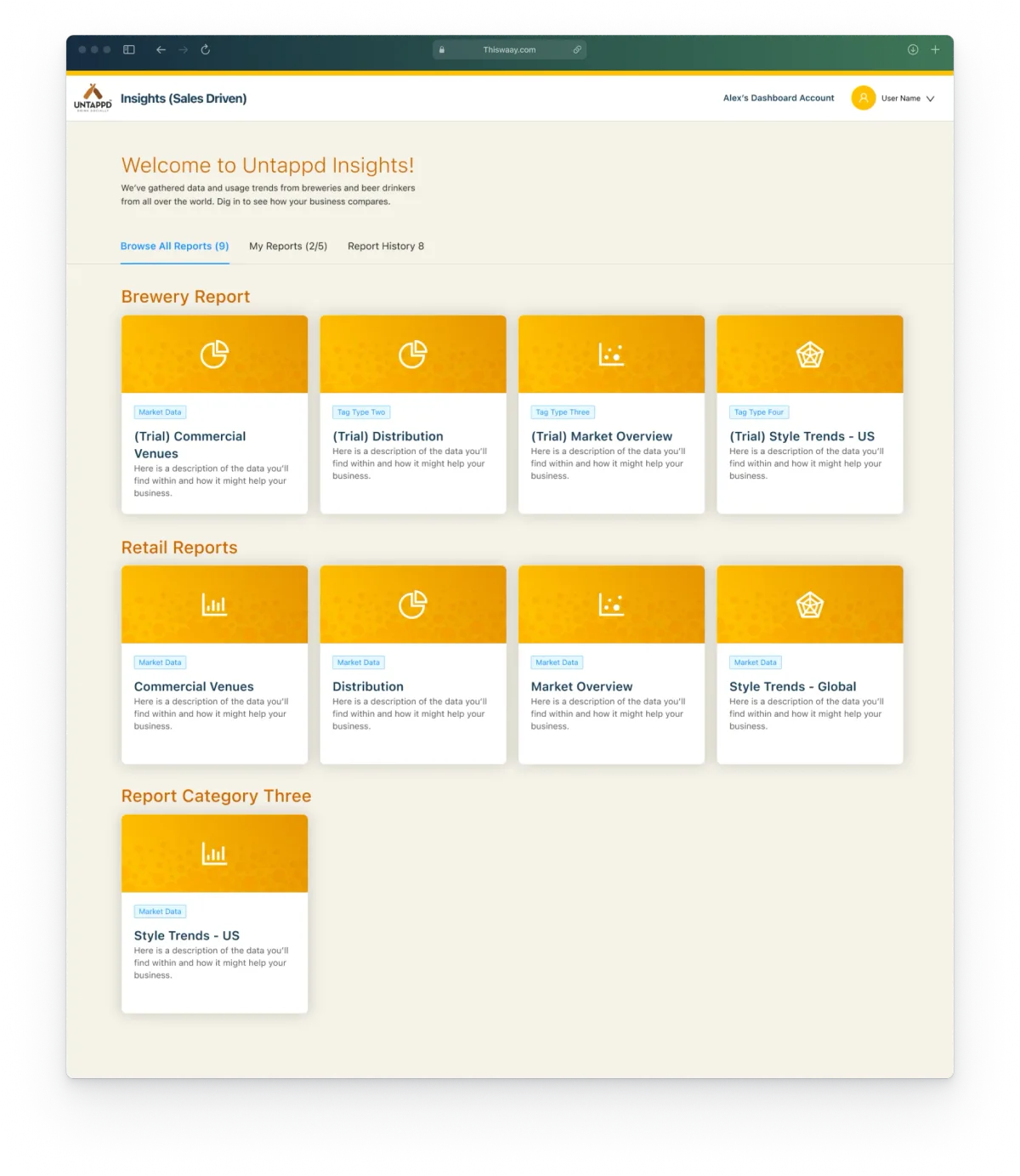
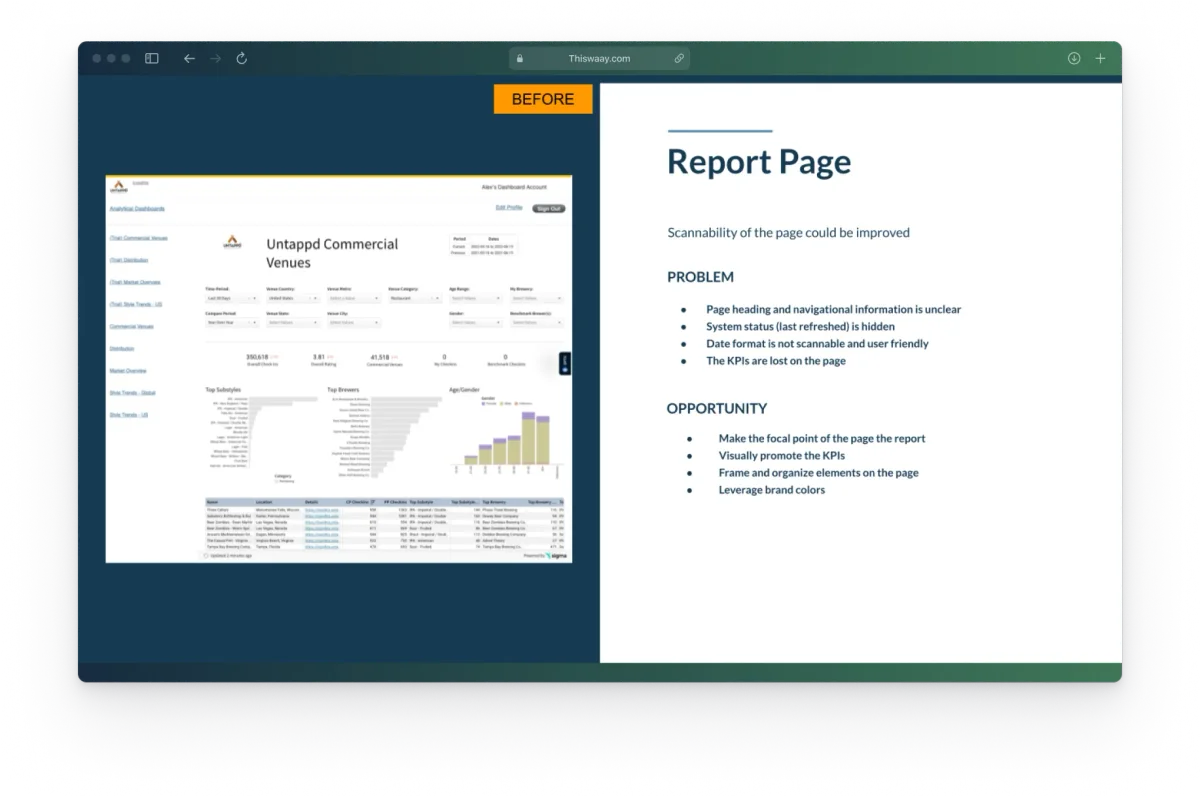
The survey sized the opportunity. The interviews explained it.
The site-intercept survey confirmed the target audience was real and material: for a substantial share of customers, wine and spirits represented a meaningful portion of business revenue, and most were updating their menus weekly — many daily.
Moderated interviews with owners and operators then revealed how menu management actually worked day to day:
The expectation was unambiguous: menu management is one holistic activity. Customers wanted every item type — beer, wine, spirits, food — managed in one place, with the same quality of experience the beer library already delivered.
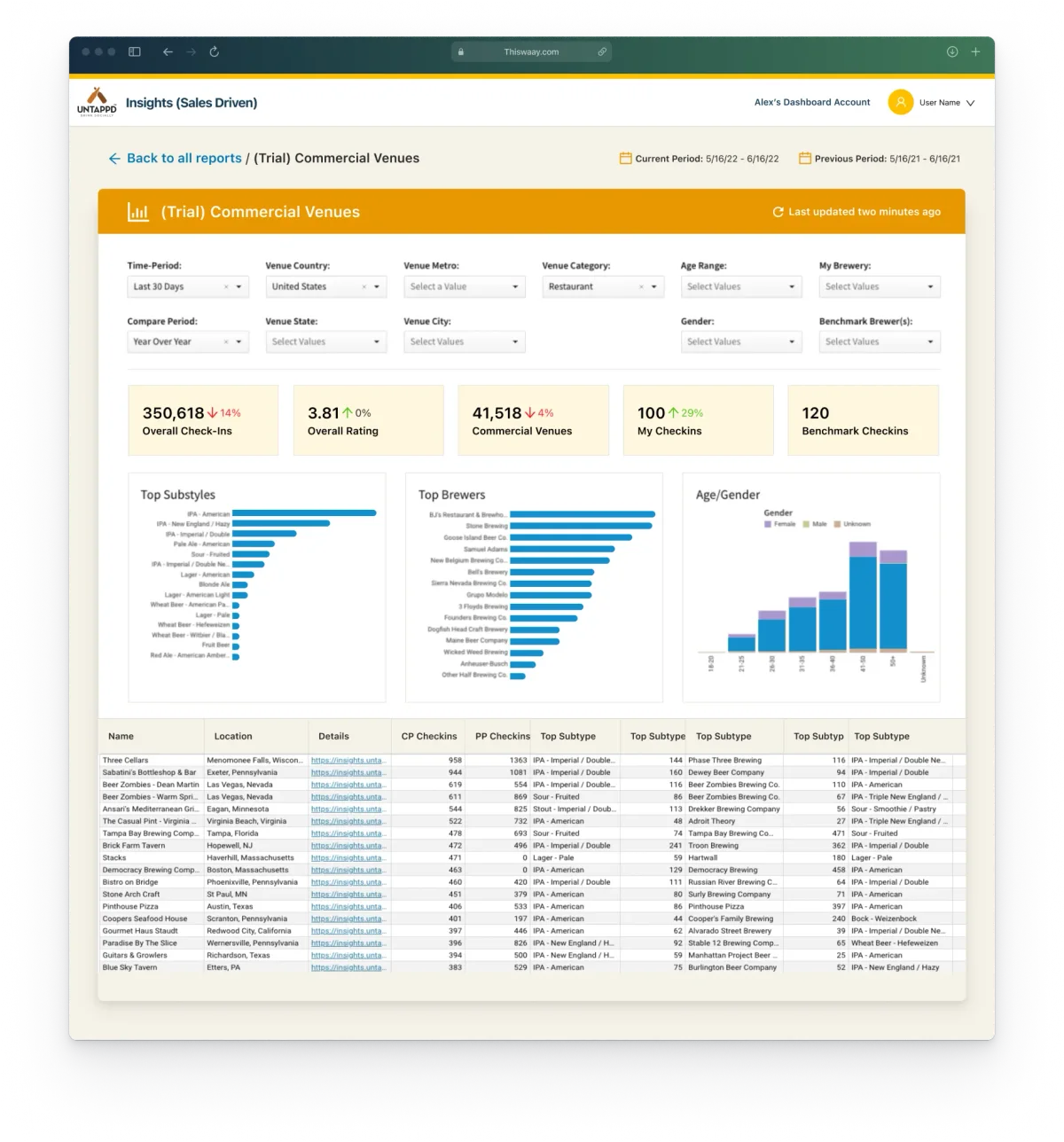
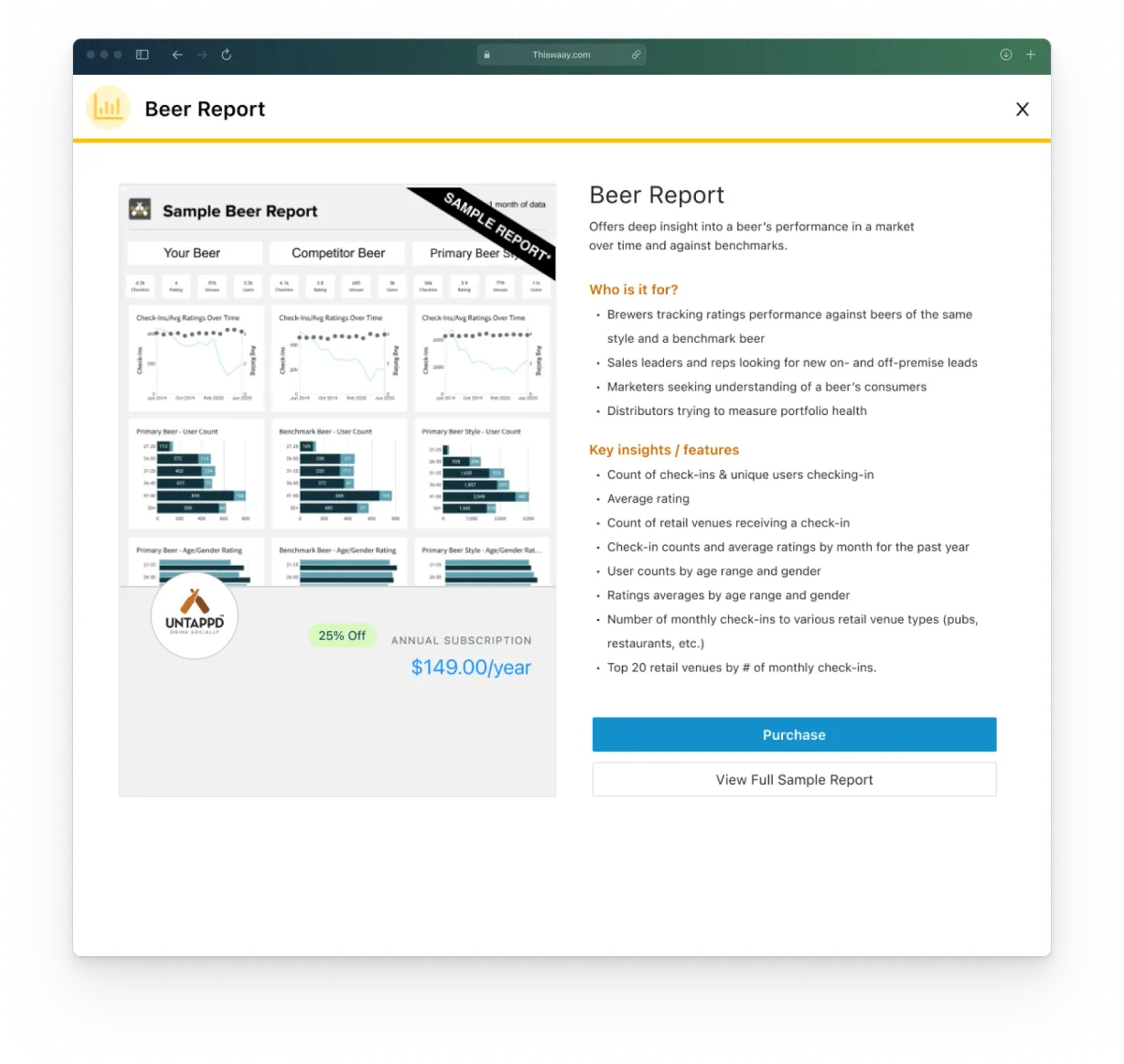
Research only earns its cost when it changes what gets built.
We translated the findings into a clear answer on both research questions. Yes — the need was real, already being met through workarounds, and customers indicated willingness to pay a modest premium for a unified menu library. And a caution: these capabilities were trending toward table stakes, meaning inaction carried competitive risk.
To make the direction tangible, we paired the prioritized feature themes with design concepts:
Each concept was grounded in an observed behavior, making the "why" behind every recommendation traceable back to customer evidence.
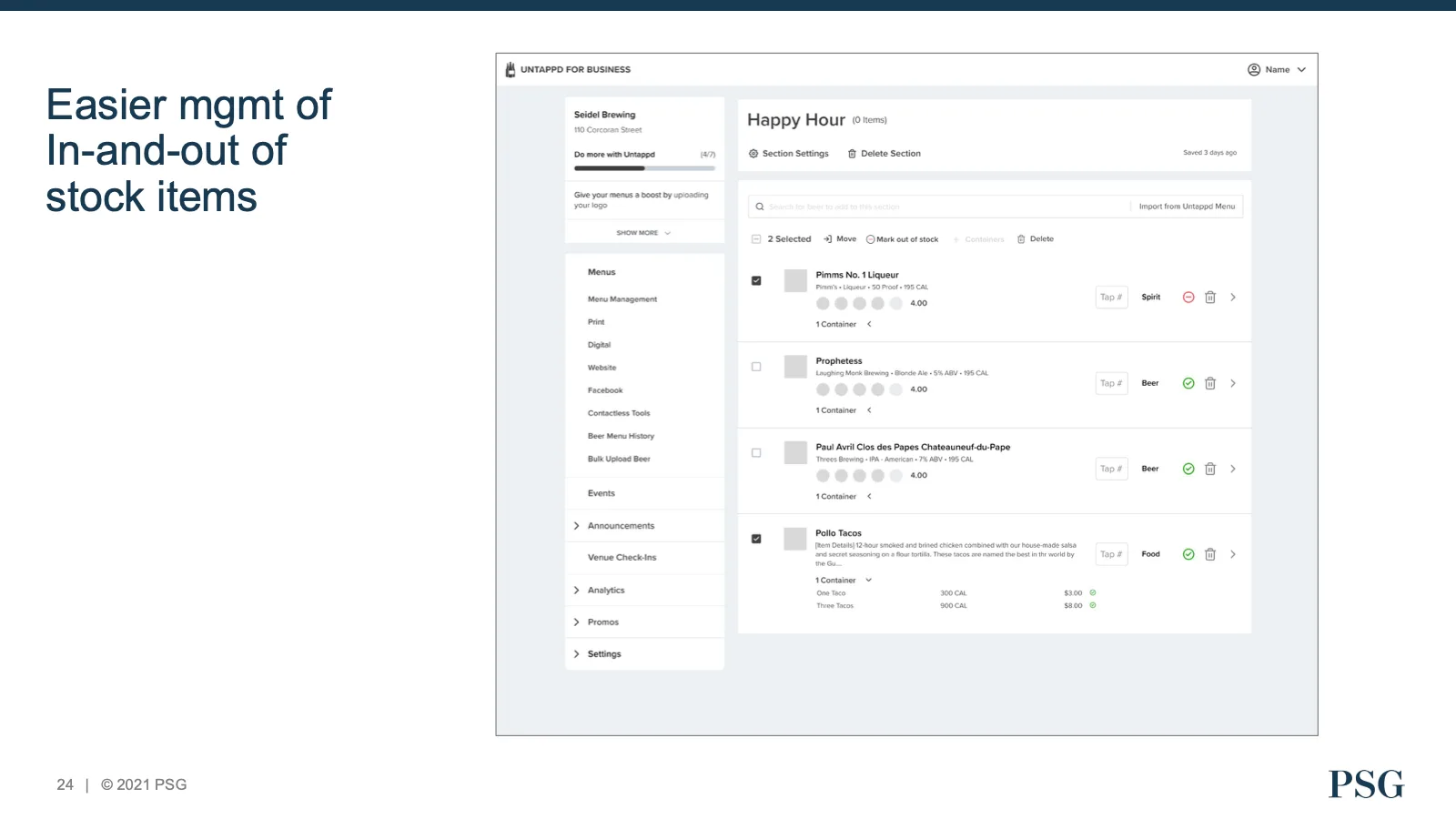
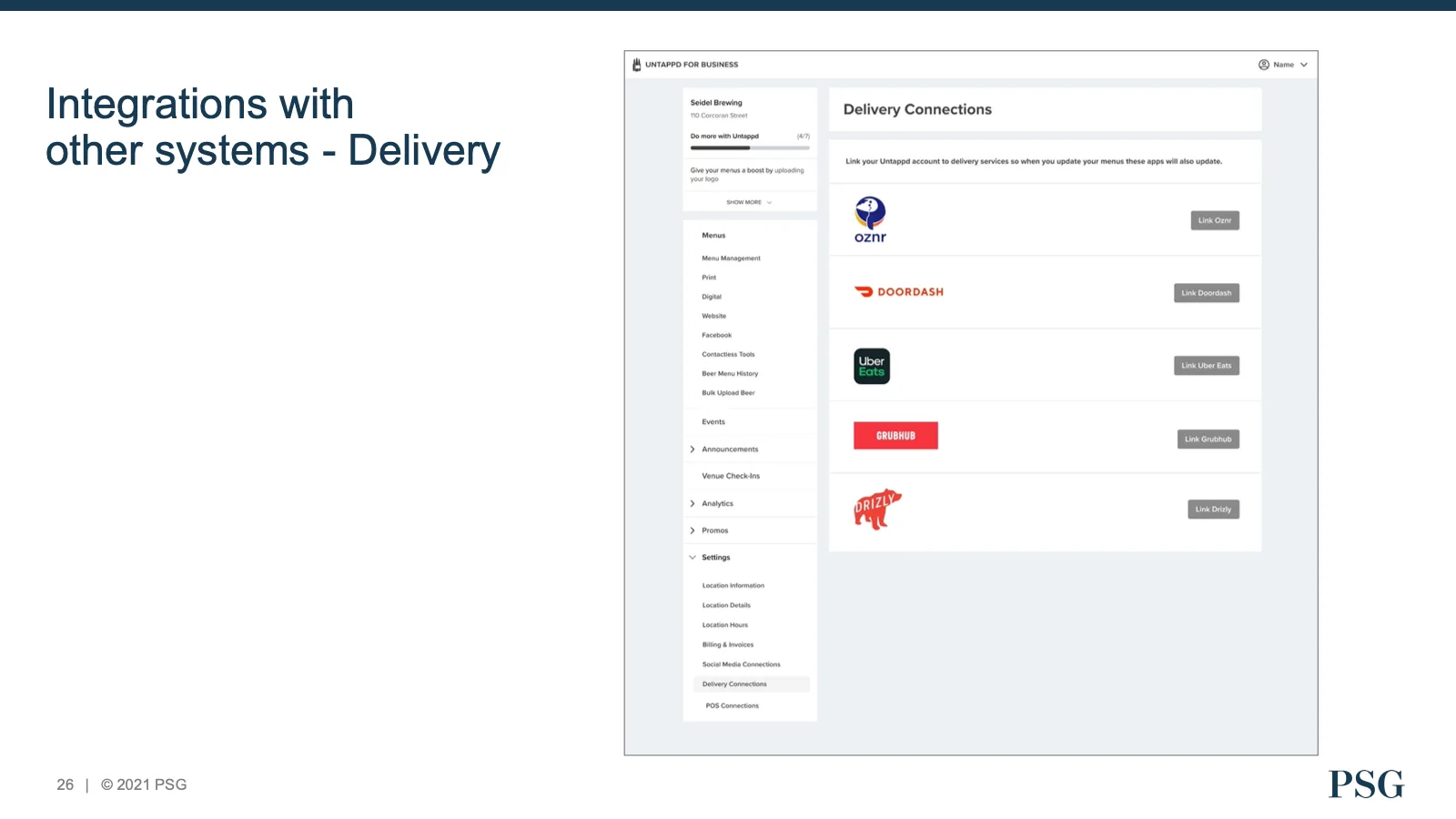
The team moved from debating opinions to prioritizing evidence.
The research changed the conversation around the product's future:
Just as importantly, the work reframed the original adoption question. The issue wasn't that customers didn't value data and menu tooling — it was that the product hadn't yet met the holistic way customers actually work.
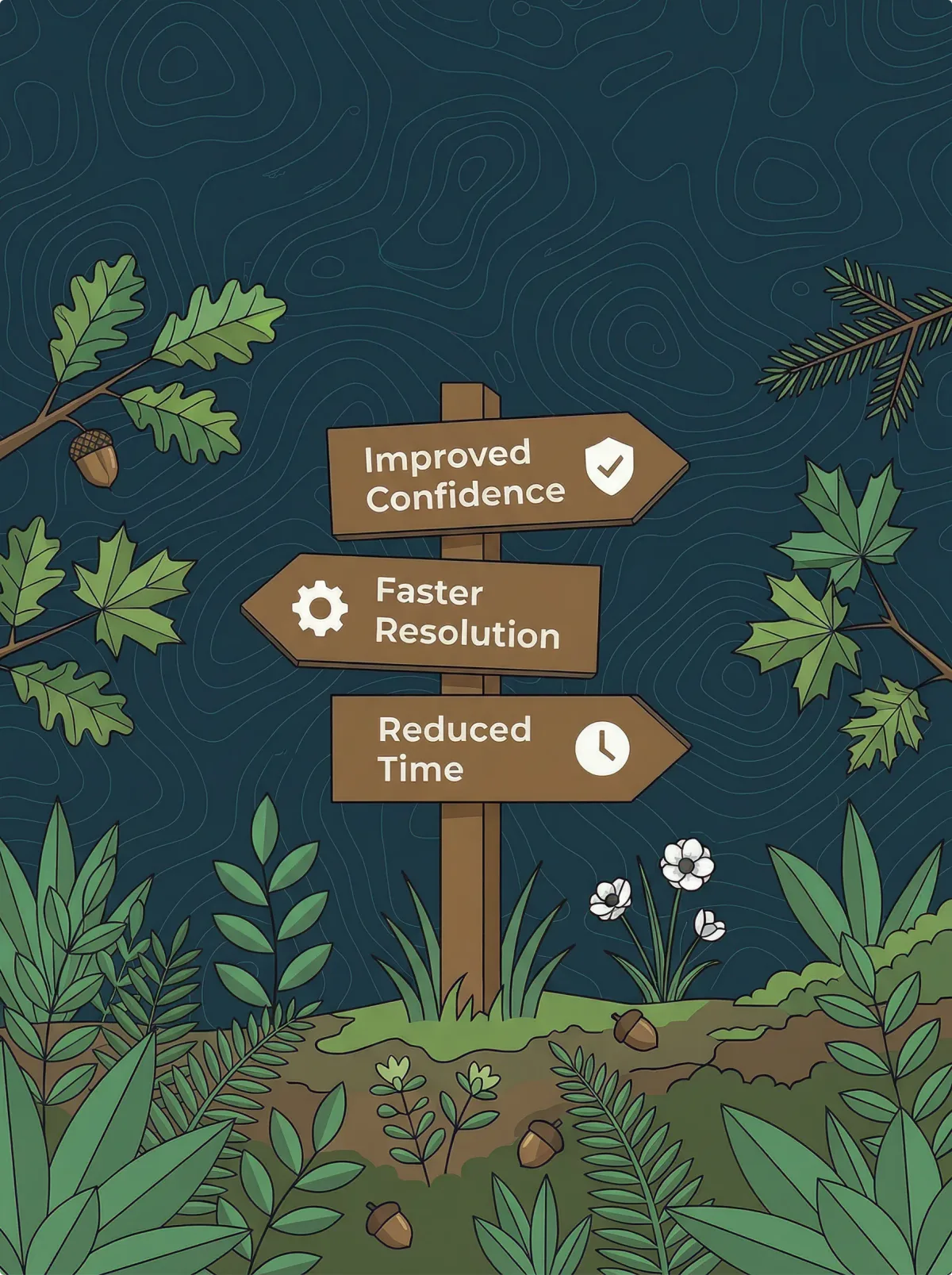
The cheapest time to learn whether customers want something is before you build more of it.
When a launch underperforms, teams naturally reach for the nearest explanation — usability, marketing, pricing. But each explanation implies a very different investment, and picking wrong compounds the original miss.
Structured research pays for itself by preventing the expensive failure modes:
A few weeks of mixed-methods research — quantitative reach plus qualitative depth — turns a product debate into a product decision. That clarity is usually worth more than the next feature.
An iOS-standard redesign that removed a hardware dependency and opened App Store distribution.
Click to learn moreDiscovery and redesign that unified a fragmented media experience across web and mobile.
Click to learn moreUsing AI to surface meaningful signals while making outputs more understandable, traceable, and trustworthy.
Click to learn moreHow we found the highest-value UX improvements in a mission-critical automation platform — no rebuild required.
Click to learn moreIf you’re weighing further investment in a product or feature, we’d love to help you get decision-grade answers from your customers first.
Start a conversation