How do you modernize a platform that enterprises trust to run their most critical operations?
Meaningful UX improvement doesn't require starting over. It requires understanding who depends on the system and where friction actually lives.
We partnered with JAMS to study how administrators, developers, and operators really work — then delivered targeted, high-impact improvements that increased clarity, confidence, and speed while respecting the existing architecture.
JAMS is a leading workload automation platform that enterprise teams rely on to orchestrate mission-critical business processes — from financial transfers to inventory management to large-scale data pipelines. Precision and uptime are non-negotiable.
As the product evolved to modernize its web experience and reach feature parity with earlier clients, the team wanted more than a visual refresh. They wanted to understand where the experience slowed users down, obscured system status, or demanded institutional knowledge — and how to fix it without disrupting the infrastructure customers depend on.
Over eight weeks, we moved from discovery through definition to design: building a shared understanding of the platform's users, systematically evaluating its most critical workflows, and delivering concept designs the team could act on immediately.
We partnered with product and engineering leadership to lead discovery, heuristic evaluation, and design concept generation across the platform's highest-value workflows — establishing a phased path to a modern, trustworthy experience without a foundational rebuild.
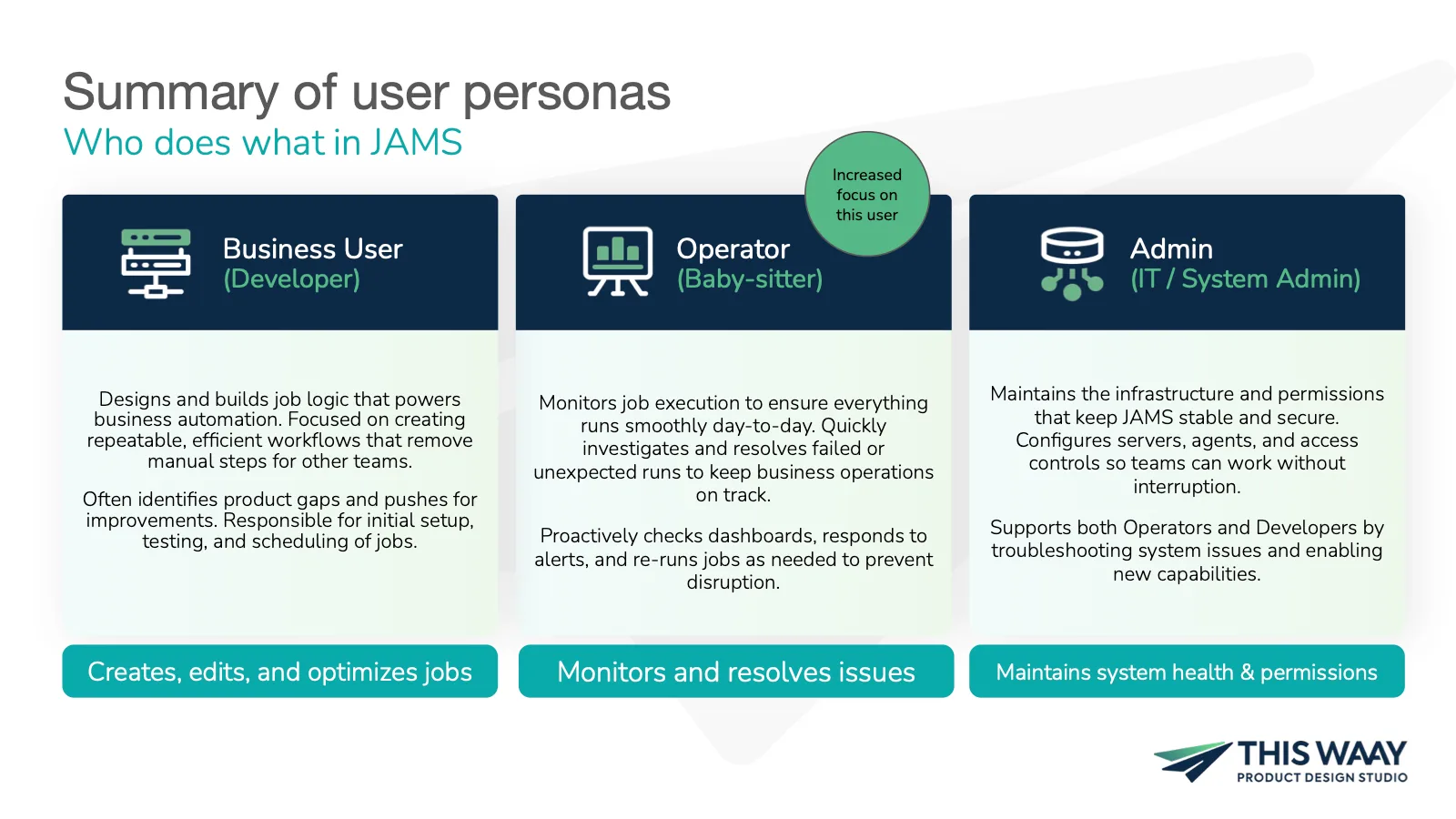
JAMS supports three very different kinds of users: developers who build automation logic, operators who babysit daily execution, and admins who keep the environment stable and secure. Each depends on the platform in a different way — and each was encountering friction in a different place.
The product's power had grown faster than its clarity.
With more than 60 job types, deeply configurable scheduling rules, and dense monitoring views, everyday questions had become surprisingly hard to answer:
The team was already investing in a modern web client. The risk was spending that investment on a facelift — reproducing existing friction in a newer visual style.
The challenge was to identify the improvements that would genuinely change how work gets done, and sequence them so the team could deliver value without pausing their release plans.
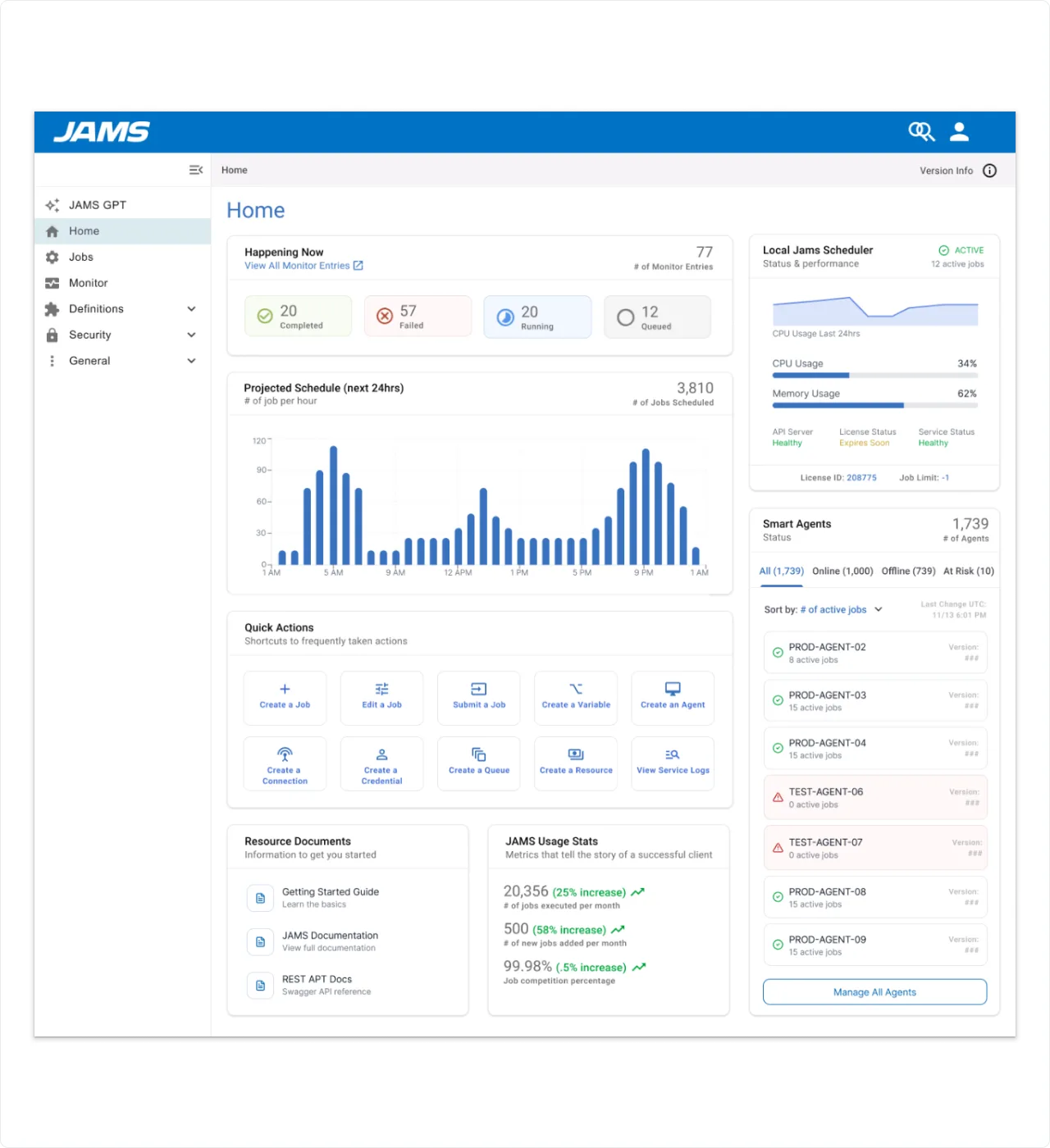
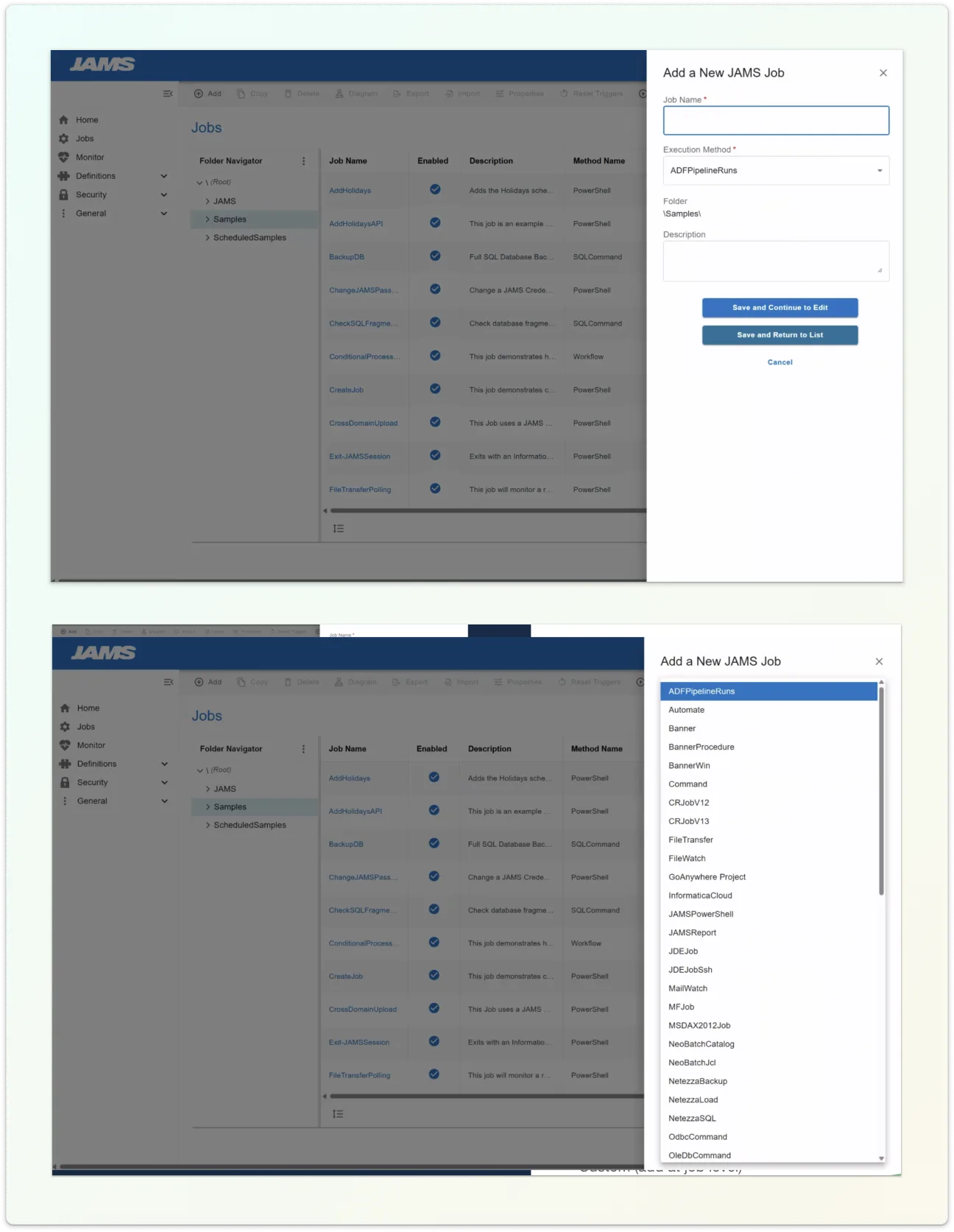
Before evaluating a single screen, we built a shared picture of who does what in JAMS — and why.
Working closely with the product team, we developed detailed personas for the platform's three core users — the Developer, the Operator, and the Admin — capturing their goals, behaviors, expectations, and the specific frustrations that slowed them down.
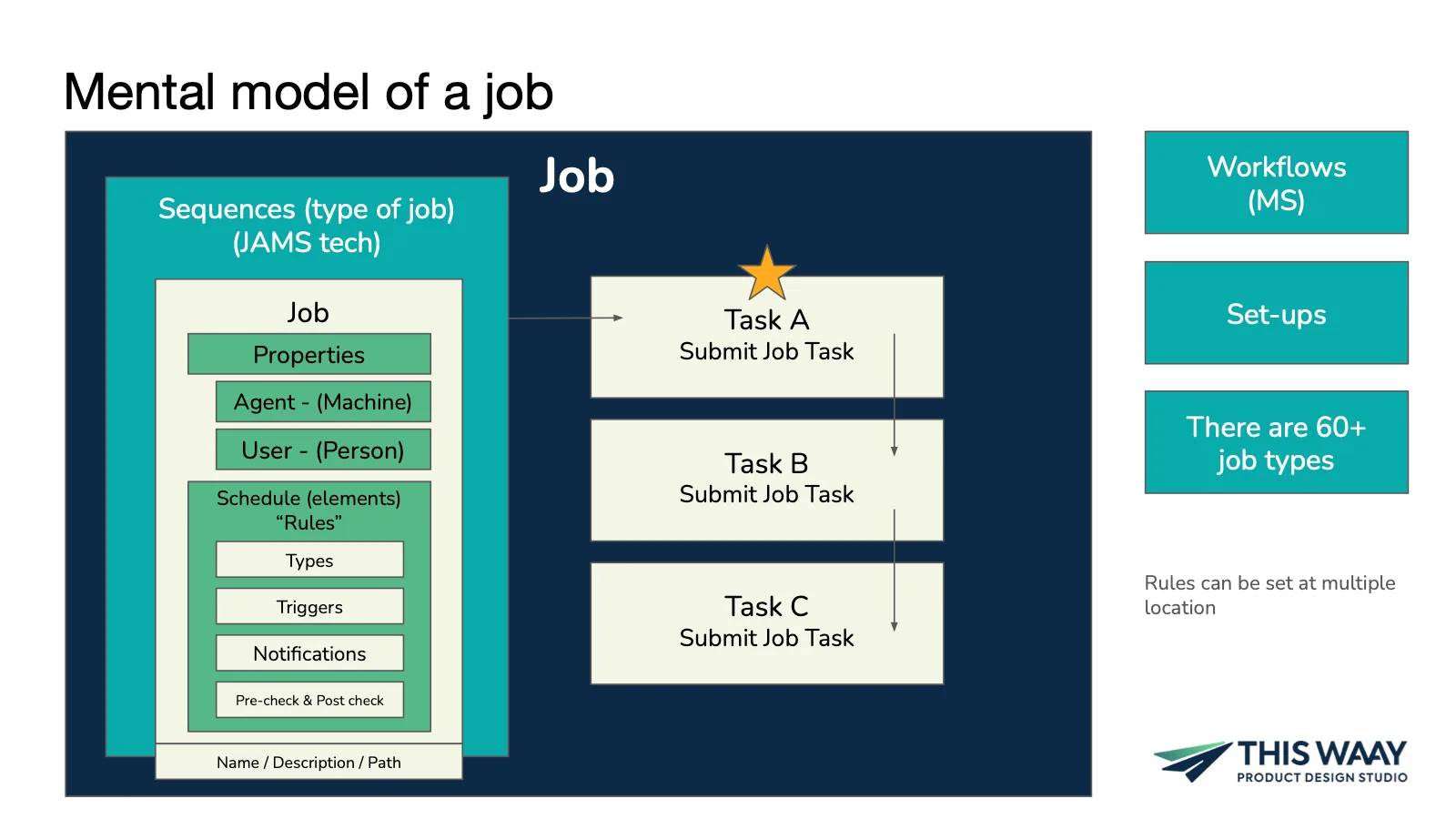
We mapped the phases of work across the platform — configure, create and manage jobs, monitor, troubleshoot — and modeled the mental model of a job itself: sequences, properties, schedules, triggers, and rules that can be set in multiple places.
These artifacts did more than inform our evaluation. They gave the team a durable vocabulary for prioritization:
A focused competitive review of neighboring automation platforms rounded out the picture, highlighting where industry patterns had moved ahead of the current experience.
We evaluated the platform the way its users experience it — one critical workflow at a time.
Rather than auditing screens in isolation, we structured the heuristic evaluation around prioritized user stories: monitoring job flow and system health, diagnosing and fixing failures, creating new jobs, and maintaining existing ones.
The findings separated cleanly into quick wins — pagination, sorting, action placement, navigation consistency — and deeper structural opportunities. We then translated the highest-value opportunities into concrete design concepts:
Each concept was designed to respect the existing information architecture — improvements the team could phase into their current build, not a parallel redesign competing with it.
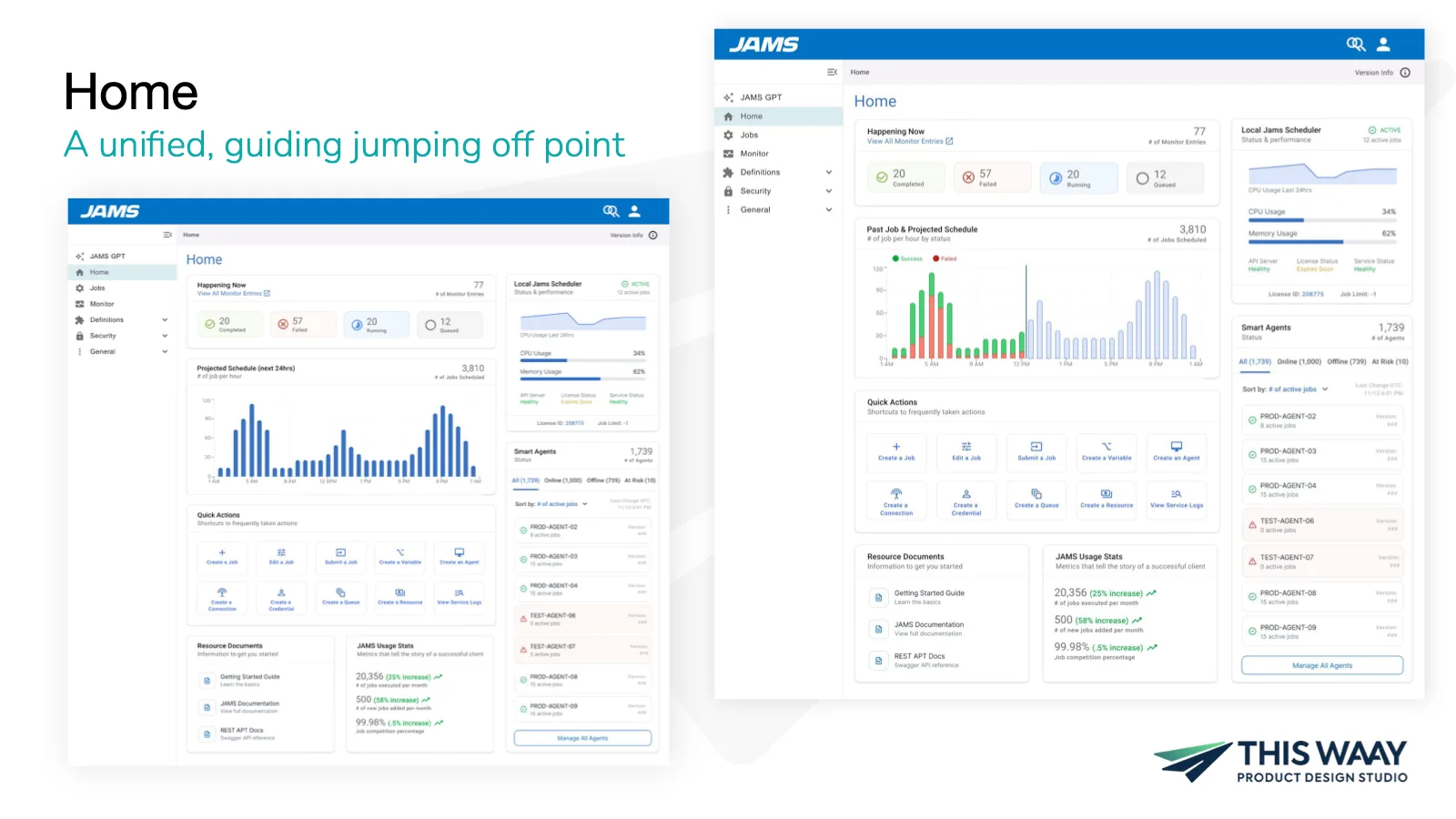
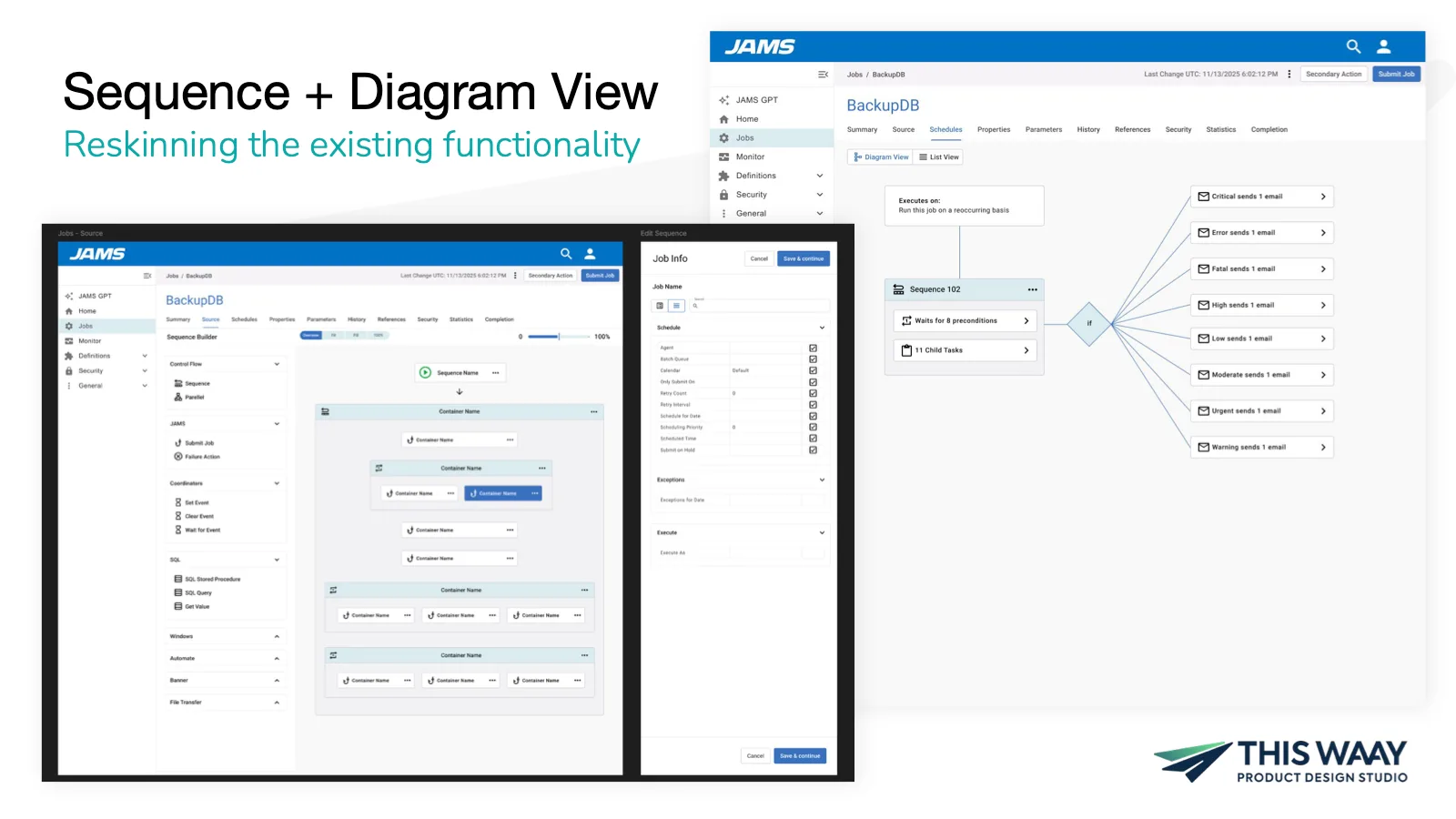
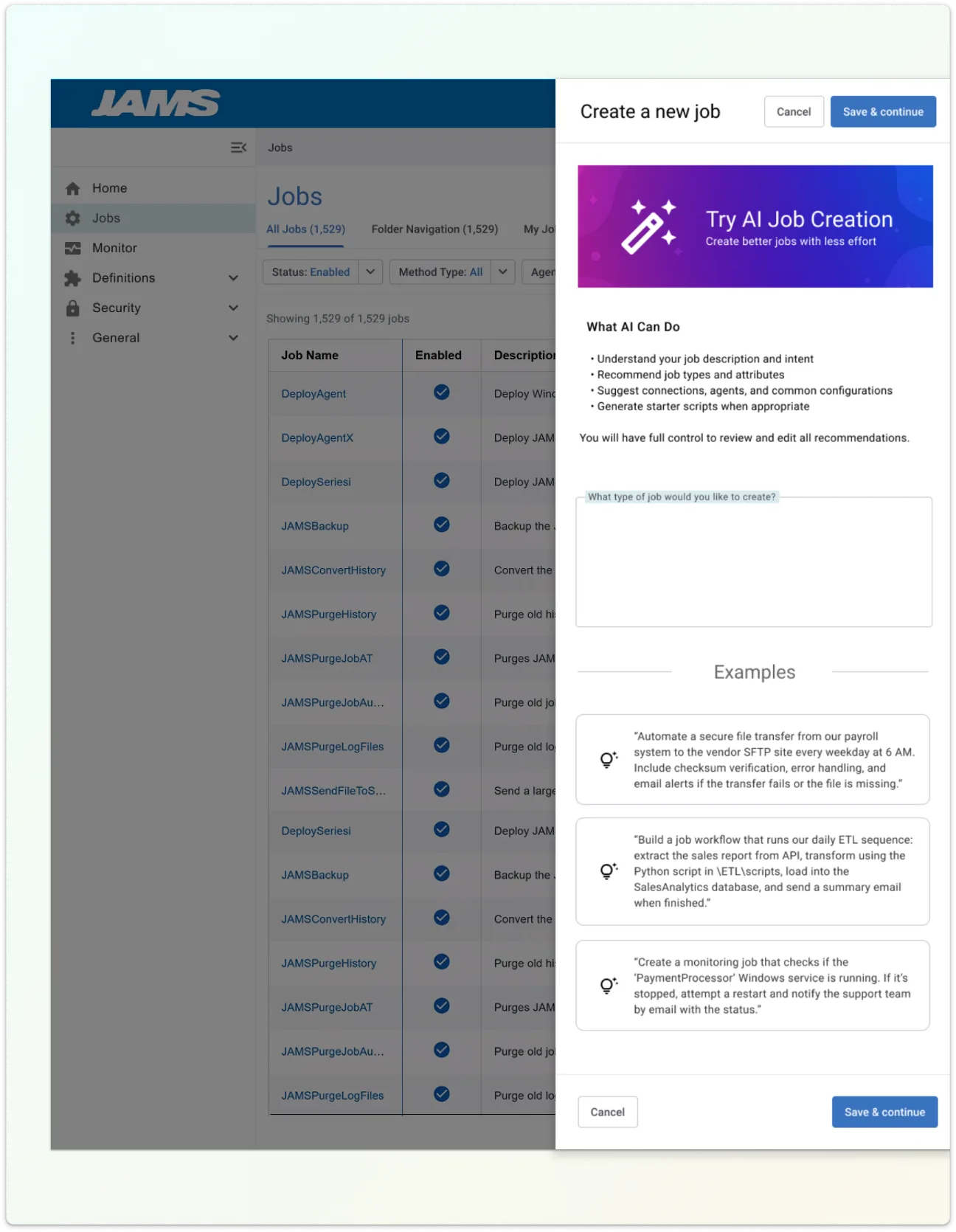
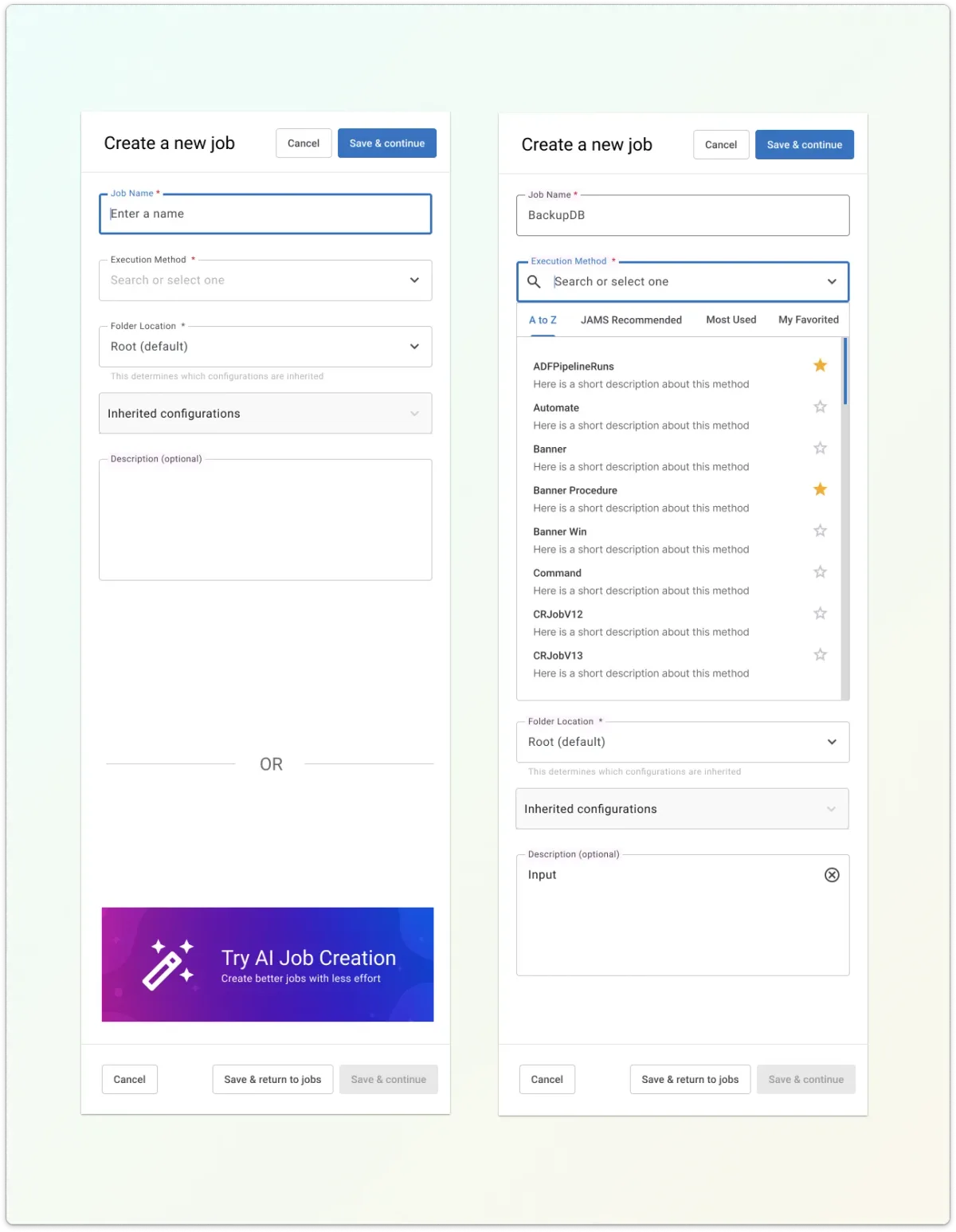
The evaluation identified high-impact UX improvements that reduce operator friction, improve system confidence, and modernize the experience — without requiring a foundational rebuild.
Because the recommendations were phased and grounded in the team's existing web app effort, they could be acted on immediately:
The discovery artifacts continue to serve the team beyond this engagement, anchoring prioritization conversations in a shared understanding of users and workflows.
The engagement also identified where intelligence could responsibly accelerate work — in troubleshooting and job creation. Those opportunities became dedicated follow-on efforts, explored in depth in our AI case studies: enhancing a data-dense platform without disrupting what works and practical AI adoption within a trusted workflow.
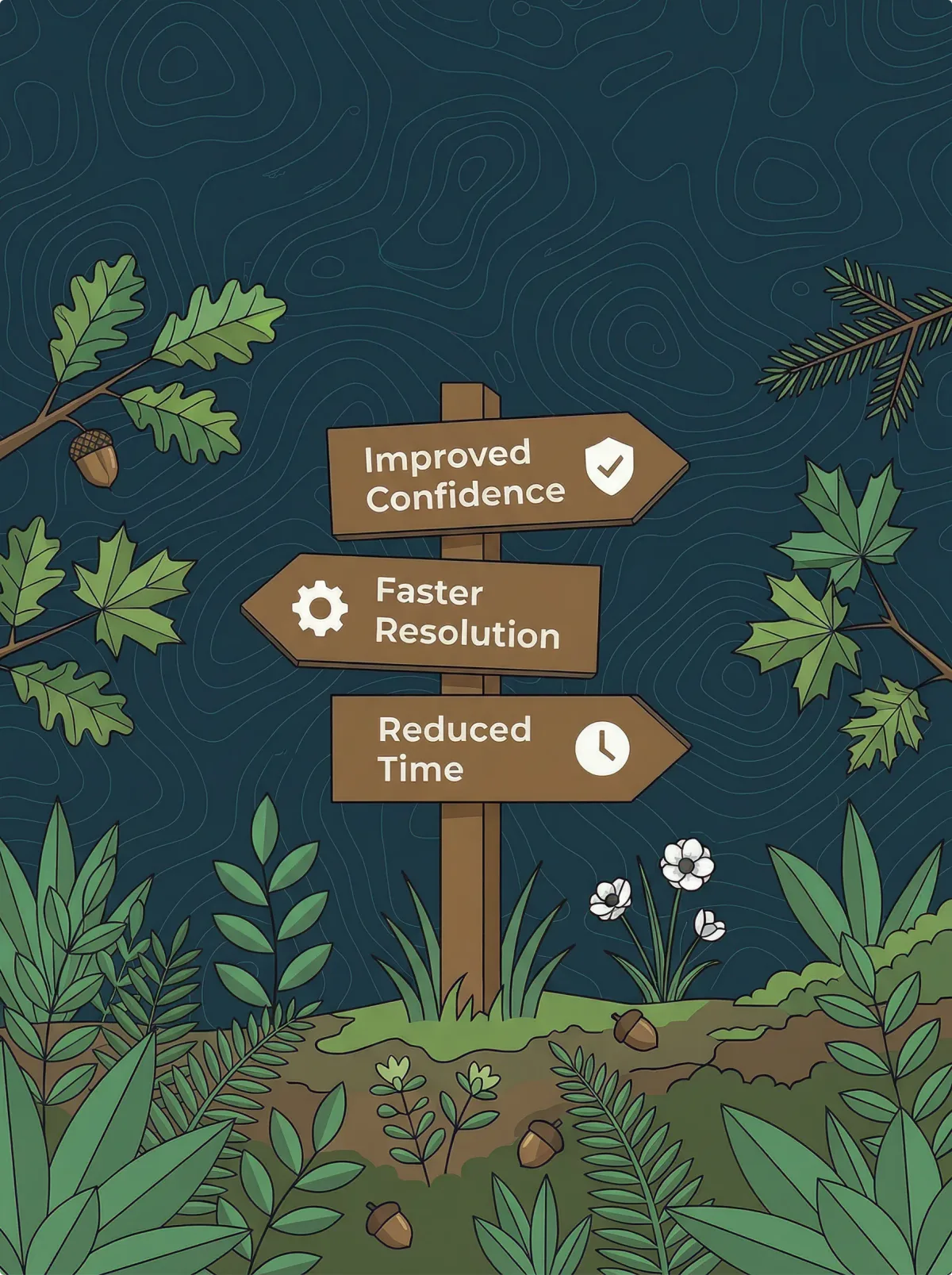
The most valuable UX work on an established product is rarely a redesign. It's knowing exactly where friction lives — and fixing it in the right order.
Mature platforms accumulate complexity for good reasons: powerful features, flexible configuration, loyal expert users. But that same accumulation quietly raises the cost of every task and steepens the curve for every new user.
Without a structured view of users and workflows, teams face familiar traps:
A focused discovery and evaluation effort — weeks, not quarters — gives teams the clarity to invest confidently, sequence pragmatically, and modernize without putting reliability at risk.

See how AI can improve clarity and decision-making in complex systems without compromising control or trust.
Click to learn moreSee how AI can accelerate a complex, expert-driven workflow without disrupting the systems users rely on.
Click to learn moreTurning four portals and two apps into one cohesive student experience with a branded north-star vision.
Click to learn moreSee how reducing workflow friction creates the clarity and structure required for effective AI adoption.
Click to learn moreIf your platform has grown powerful but heavy, we’d love to help you find the changes that matter most — and a pragmatic path to shipping them.
Start a conversation