What good is critical video evidence if users have to hunt for it?
Video was central to Vestige's value proposition — yet scattered across dashboards, buried behind clicks, and split between live and historical views.
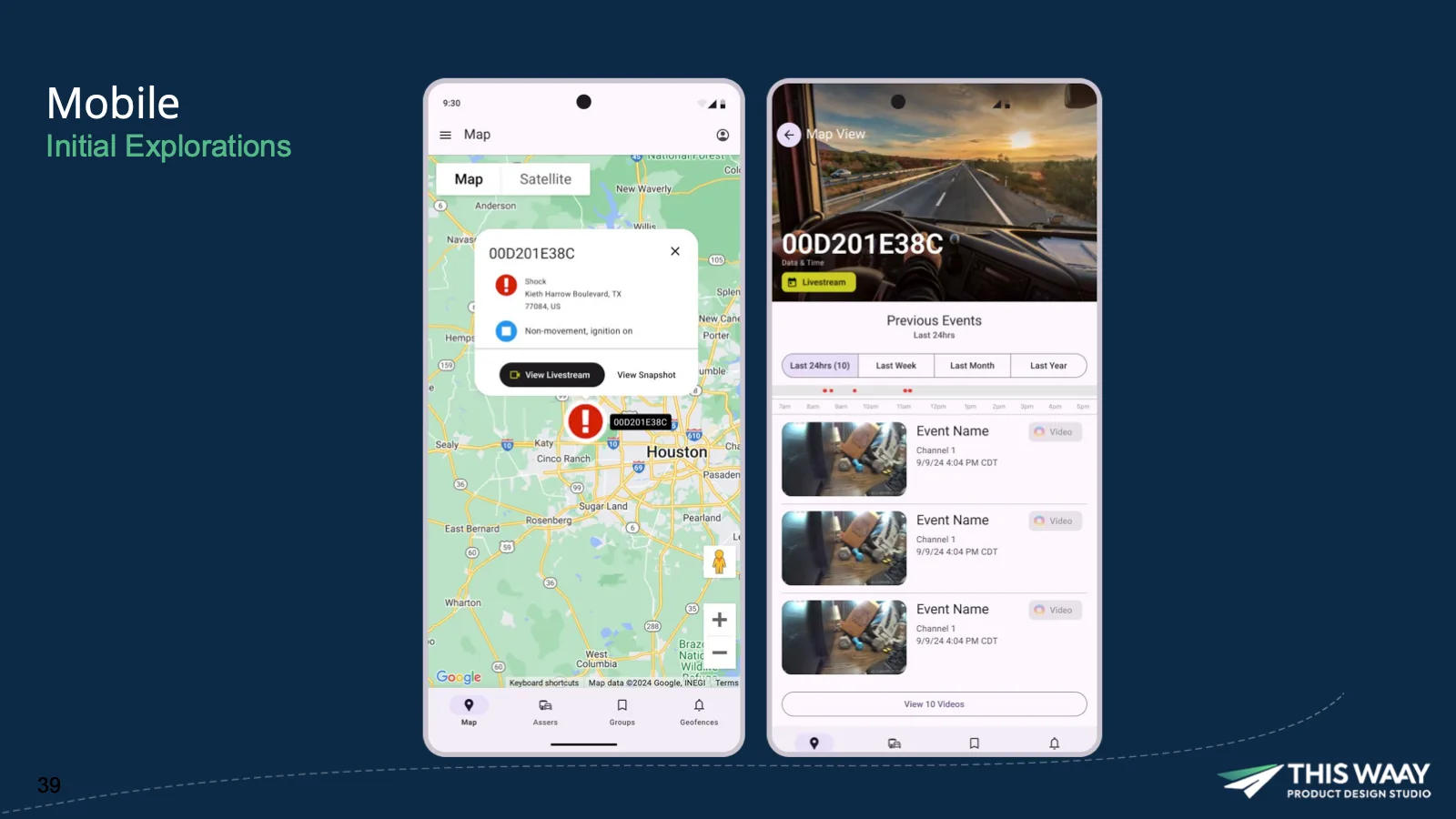
We led discovery into how users actually engage with fleet media, modeled their real needs, and designed a modern, unified media experience across web and mobile.
Vestige provides transportation logistics solutions, giving fleet managers a centralized view of vehicle status. In the second phase of the application redesign — following our initial discovery and redesign work across the platform — the focus shifted to the media experience: the in-cab and road-facing video that anchors the product's value for evidence, safety, and driver performance.
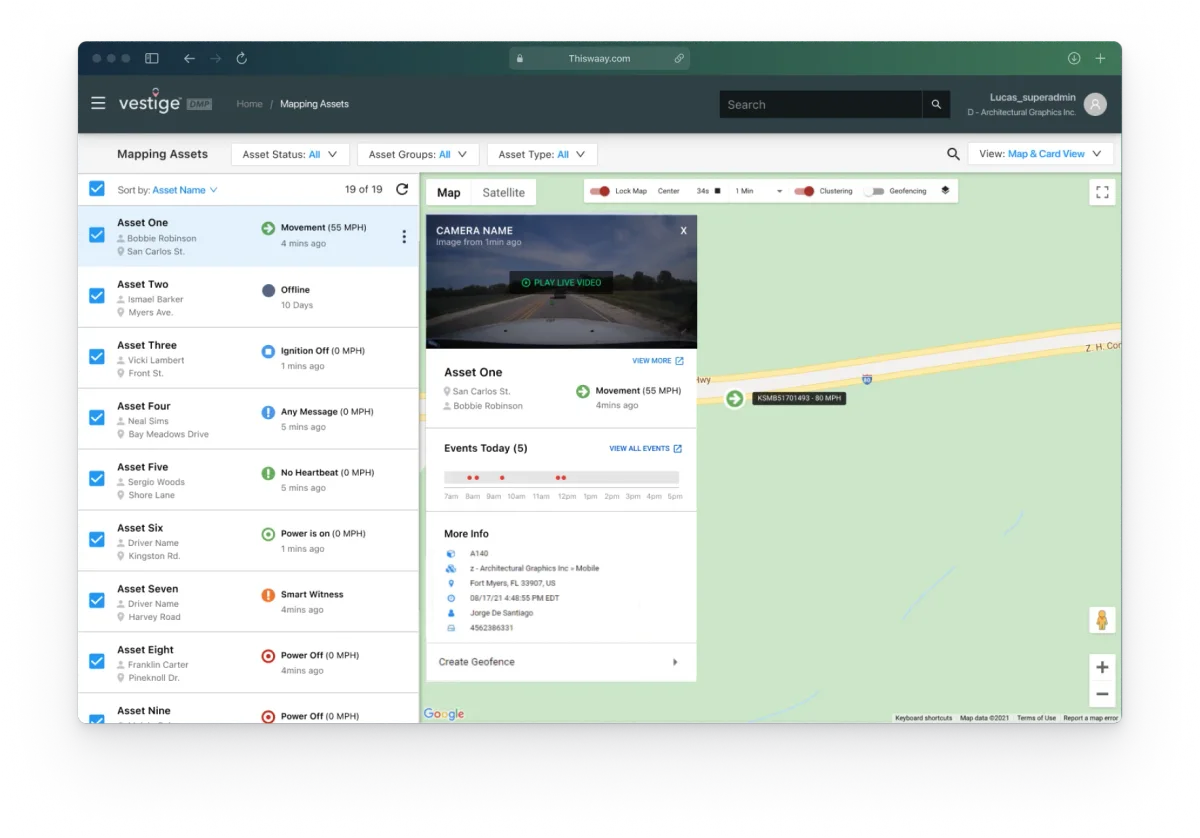
Video functionality had grown organically across the platform. Media surfaced in several different dashboards, each with its own viewer, entry point, and conventions. Live streams lived apart from historical clips. Individual videos lacked context, and finding footage of a specific moment required knowing exactly where — and how — to look.
We led a full discovery-to-design arc: auditing how media appeared throughout the product, studying industry patterns, interviewing users about how they actually engage with video, and translating those insights into modern concepts for both web and mobile.
We partnered with the Vestige team through discovery, definition, and design — building the needs models that framed the problem space and delivering concept designs the team engaged us to help carry into development.
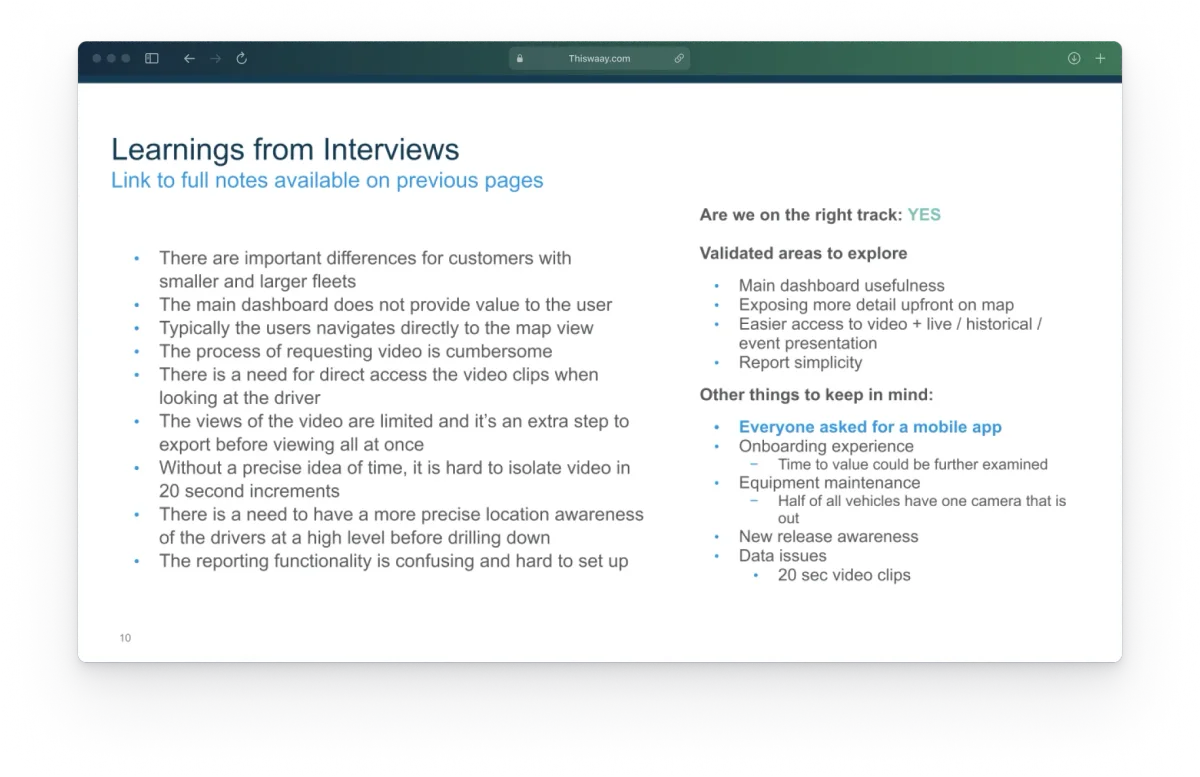
For dispatchers and fleet managers, video answers the questions that matter most: What happened? Is my driver okay? What do I need to plan for tomorrow? But the experience of getting to that answer was working against them.
The product had the footage. Users had the questions. The experience stood between them.
The functionality audit made the pattern visible across every surface:
The challenge was to unify a fragmented set of media surfaces into one coherent experience — without losing the investigative depth that power users relied on.
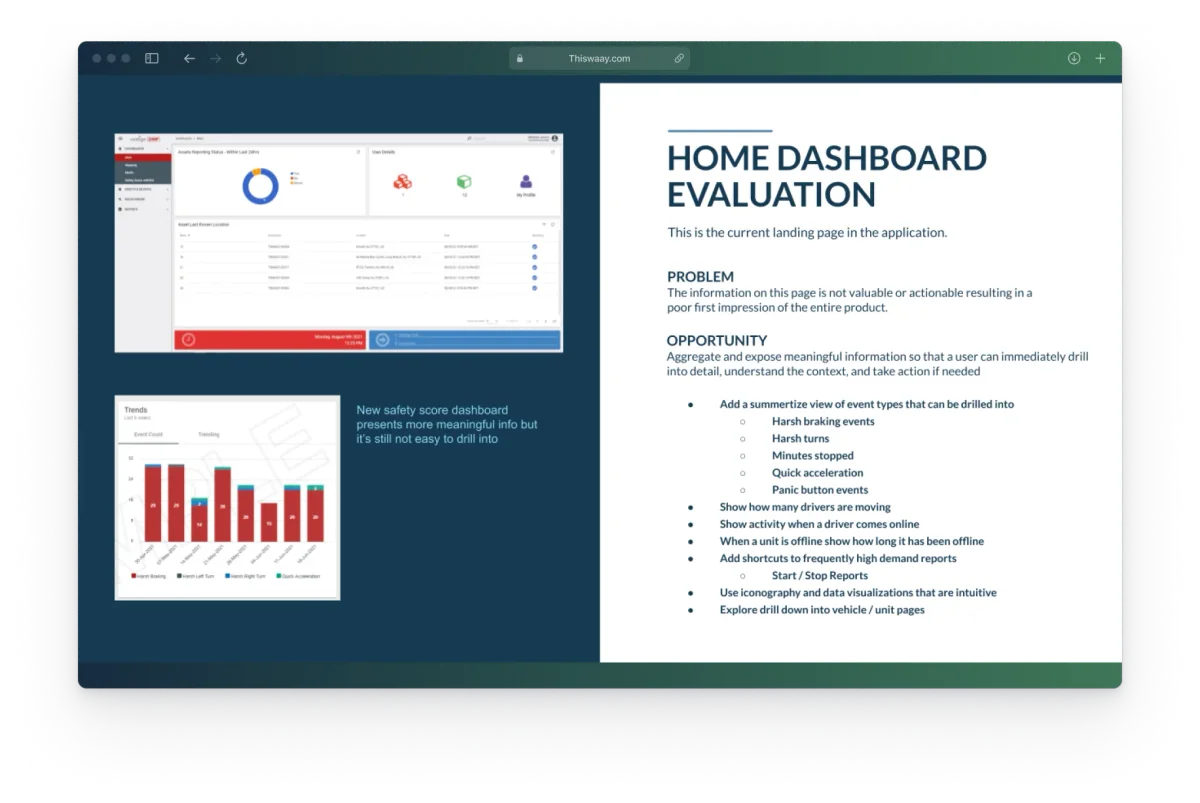
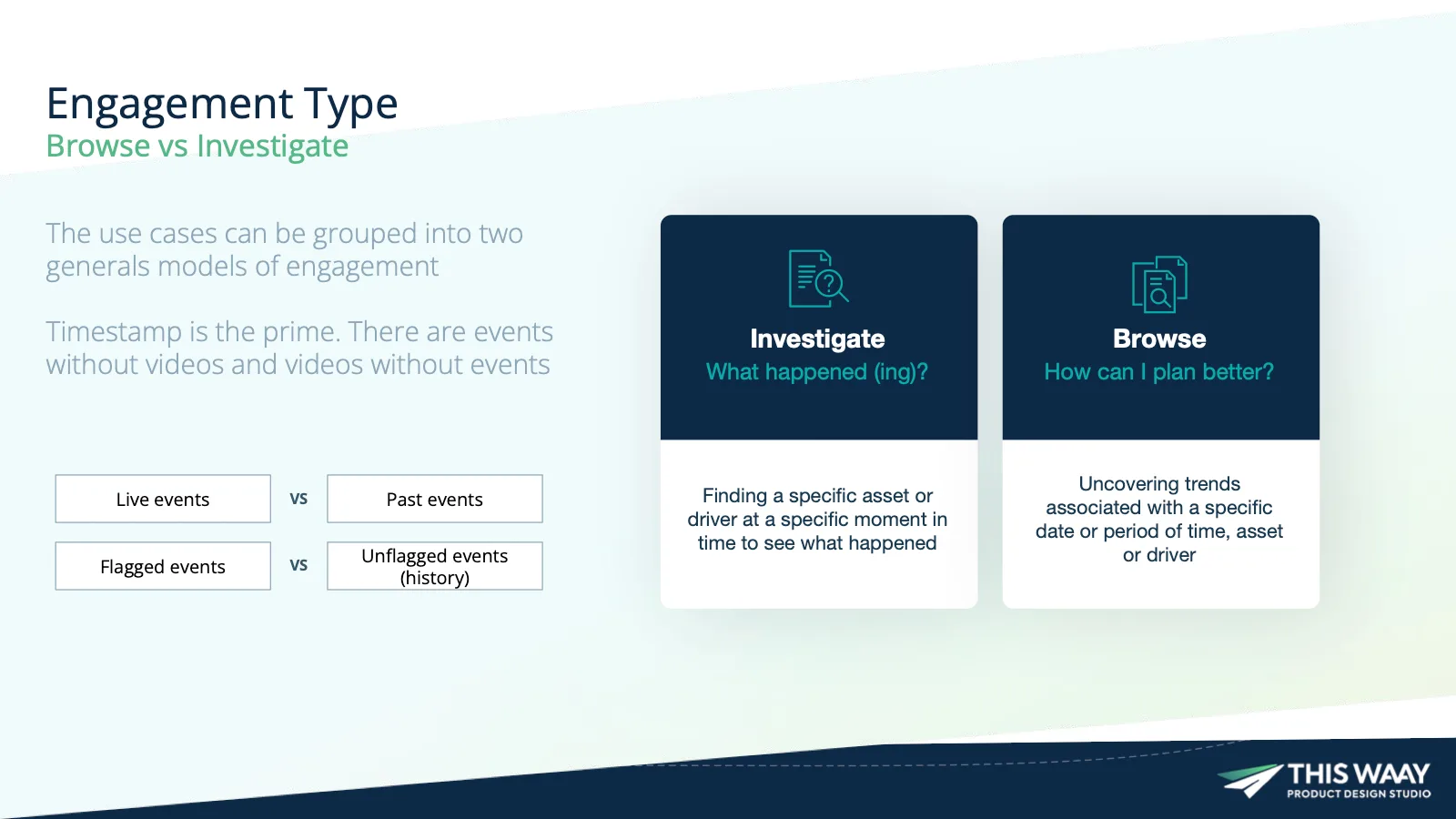
Every use case reduced to one of two modes: investigating a specific moment, or browsing for patterns.
We paired the internal audit with a best-practice investigation of products that handle event video well — home monitoring and security platforms with mature multi-camera and timeline experiences — and interviewed users about how media fits their real workflows.
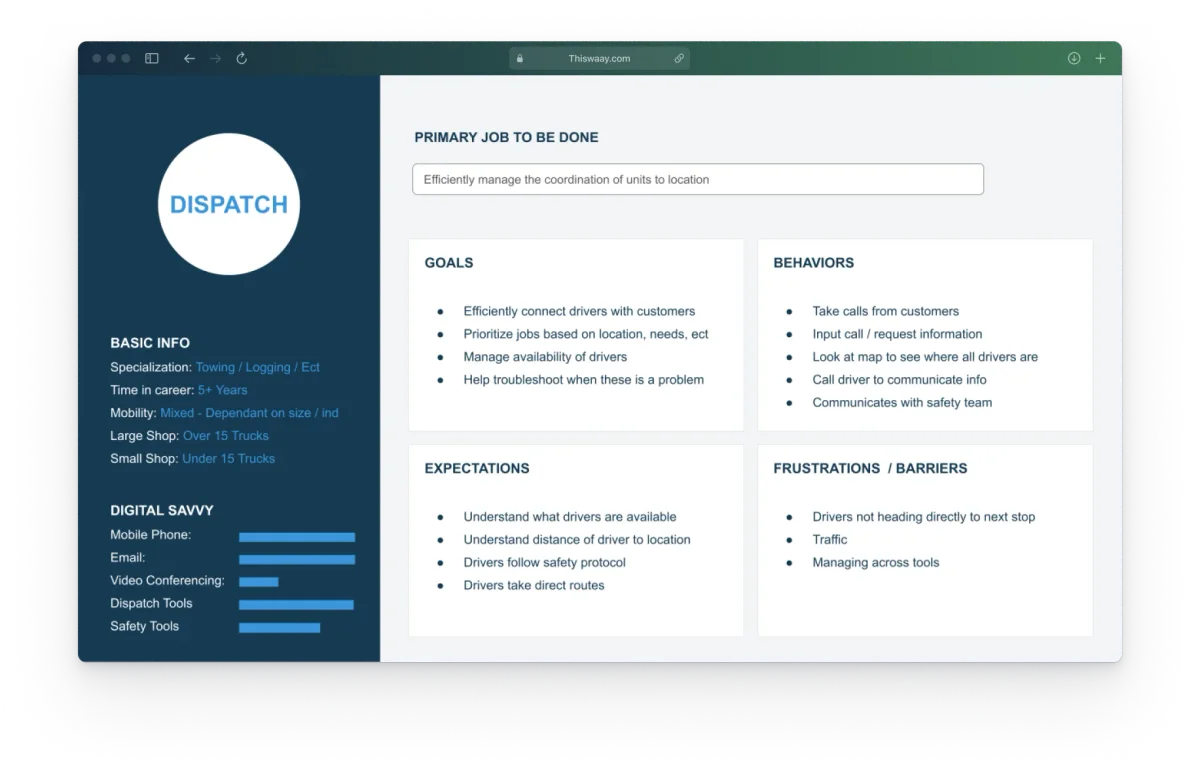
The definition work distilled everything into models the team could design and prioritize against:
Mapping the current flows against those stories quantified the friction: reaching a single piece of relevant footage could take five or more steps across multiple dashboards — and a "how might we" emerged: surface relevant clips so users don't have to search for important events at all.
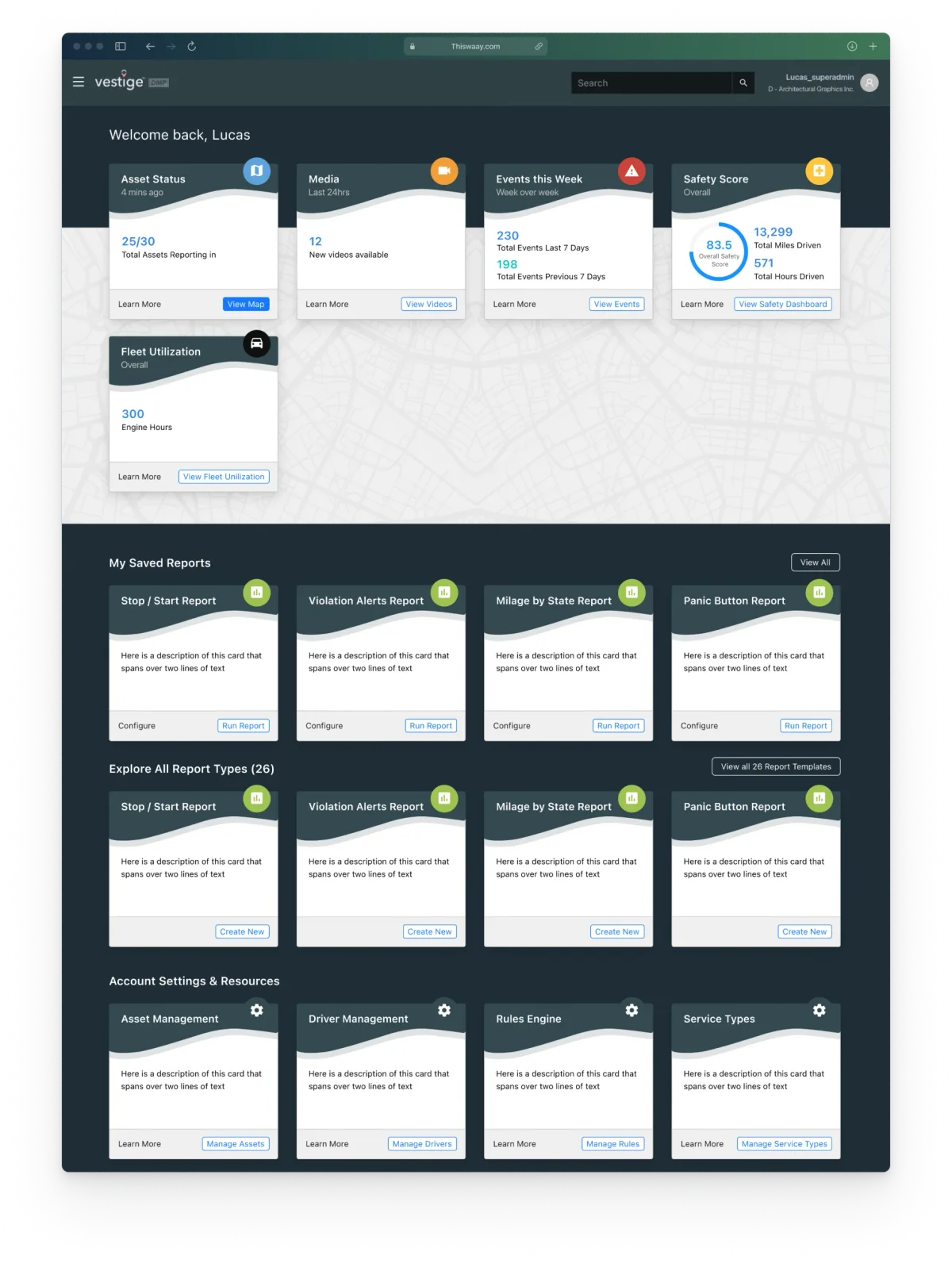
One timeline, one viewer, and video where users already are.
The concepts unified the media experience around the models from discovery:
Each concept connected user needs to business goals: making video easier to reach makes the product's core value impossible to miss.
The engagement didn't end at concepts — we were engaged to help carry the designs into development.
The work delivered value at every layer of the product organization:
By anchoring the redesign in how users think — assets, drivers, events, moments in time — rather than how the system stored data, the new experience made the product's most valuable capability feel like its most accessible one.
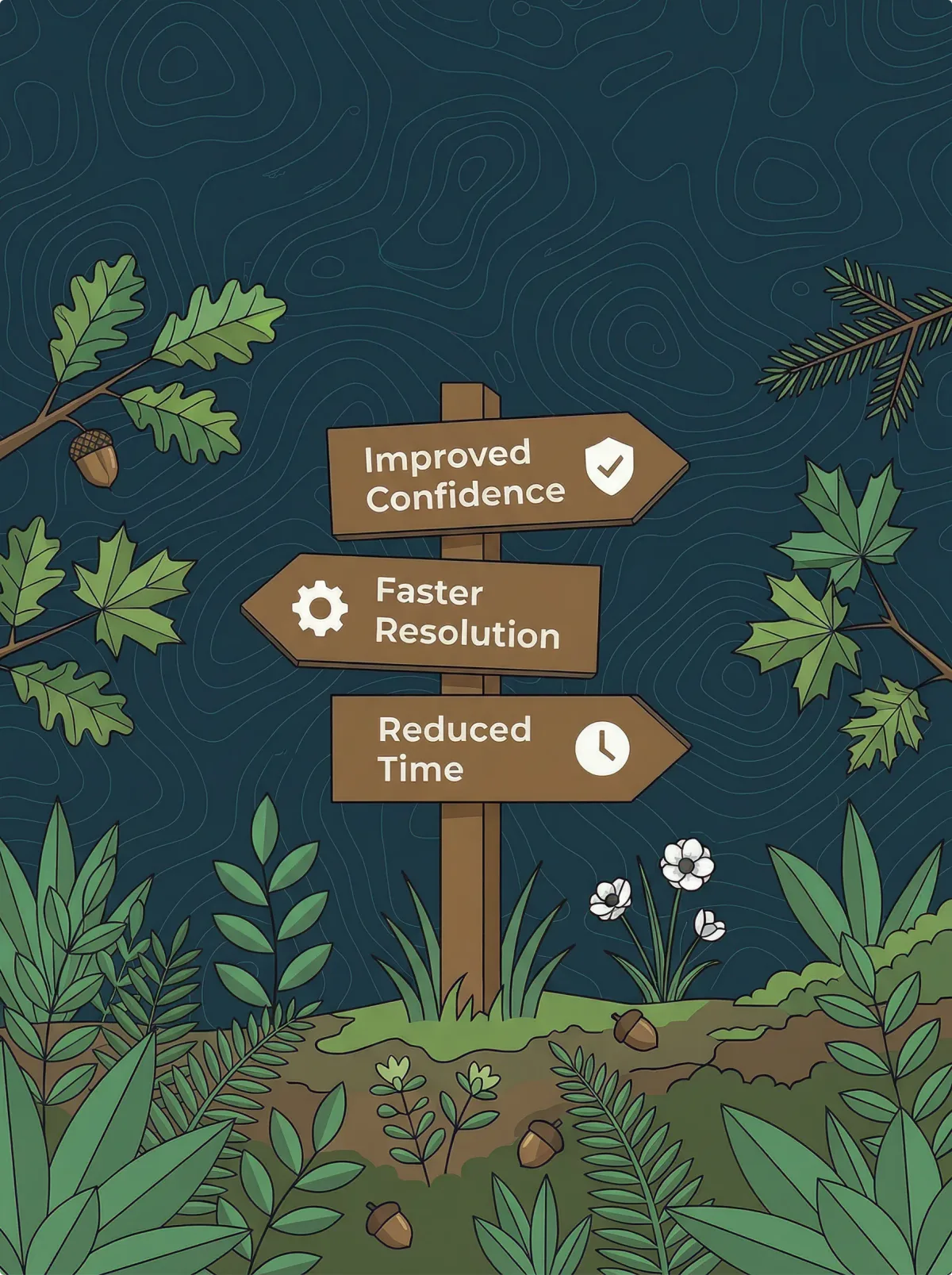
If your differentiating capability takes five clicks to reach, your product is competing with one hand tied behind its back.
Features that grow organically tend to land where the system architecture made them easy to put — not where users need them. Over time, a product's most valuable capability can end up as its hardest to find.
The symptoms are recognizable in any data-rich product:
The fix starts with a model, not a mockup. Understanding how users think about their world — and whether they're browsing or investigating at any given moment — gives every subsequent design decision a foundation. That's how a buried feature becomes the reason customers choose you.

Using AI to surface meaningful signals while making outputs more understandable, traceable, and trustworthy.
Click to learn moreHow we found the highest-value UX improvements in a mission-critical automation platform — no rebuild required.
Click to learn moreSee how AI can improve clarity and decision-making in complex systems without compromising control or trust.
Click to learn moreSee how AI can accelerate a complex, expert-driven workflow without disrupting the systems users rely on.
Click to learn moreIf the feature that sells your product is buried inside it, we’d love to help you bring it to the surface — starting with how your users actually think.
Start a conversation