AI earns trust when it reflects how leaders think, surfaces meaningful signal,
and preserves decision authority.
This project introduced a net new executive dashboard for COOs and senior operators who are accountable for performance but rarely log into operational systems. Research confirmed they seek exceptions, trends, and early risk signals, not activity summaries.
We designed a strategic entry point that surfaces high-signal insight in under two minutes, elevating the platform from a team tool to a leadership system.
Xenia is a data-rich operational platform used daily by managers and field teams, but rarely by senior leaders. Through qualitative interviews with COOs and founder-operators, we validated that executives delegate platform engagement and rely on prepared reports, conversations, and store visits for visibility.
At their level, leaders are not looking for completion data. They want exceptions, trends, and early risk signals surfaced quickly and credibly. If insight requires interpretation or digging, it is ignored.
The opportunity was to introduce a net new executive dashboard that elevates the platform from a team tool to a leadership system. Trust was the defining constraint. AI needed to surface meaningful signal aligned to executive mental models while preserving authority and control.
This Waay led executive research, synthesis, and experience strategy to define what would genuinely earn leadership engagement. We translated qualitative insights into an exception-first dashboard architecture and designed explainable AI patterns that surface high-signal insight while preserving executive authority and control.
Executives had little reason to log into the platform, and holistic operational excellence metrics did not exist systematically within Xenia or outside of it.
While Xenia captured detailed activity at the operator level, executive visibility often lived in disparate spreadsheets, prepared reports, and conversations.
Key challenges:
Introducing AI without defining a compelling executive value proposition risked adding features without driving adoption.
The core challenge was not adding intelligence. It was creating a reason for executives to show up.
The core challenge was not surfacing more information, but surfacing the right information in a way leaders could trust.
Rather than positioning AI as a standalone assistant or executive summary generator, we designed a dedicated executive entry point grounded in exception visibility, trend clarity, and explainability.
Intelligence was structured as a high-signal interpretation layer, not a prescriptive decision engine. The goal was to align with how COOs and senior operators already evaluate performance while elevating visibility beyond delegated reports.
The strategy was guided by three core principles:
AI analyzed operational signals across time, hierarchy, and location groupings to identify anomalies, performance shifts, and emerging risks. Insights were paired with traceable context so leaders could understand what changed, why it changed, and where to focus.
Executive-level entry point
A dedicated dashboard designed for portfolio-wide visibility rather than operator task management.
Exception-first architecture
High-risk, overdue, and anomalous signals prioritized over completion metrics.
Trend over snapshot
Directional movement across time periods surfaced to support performance evaluation.
Explainable synthesis
AI-generated insights grounded in visible data, with clear traceability back to source metrics.
Sub-two-minute value moment
Designed to deliver meaningful signal quickly, reducing friction to repeat engagement.
Foundation for expansion
Interaction patterns and integration boundaries defined to support future AI capabilities without disrupting core workflows.

The Executive Dashboard repositioned Xenia at the leadership level by delivering meaningful, portfolio-wide insight directly to executive decision-makers. By making performance shifts visible and actionable within minutes, the platform created sustained executive engagement and surfaced value where renewal decisions are made.
The experience emphasized:
Executives could quickly understand performance shifts and drill into supporting data without losing control or context.
The Executive Dashboard repositioned Xenia at the leadership level by delivering meaningful, portfolio-wide insight directly to executive decision-makers. By making performance shifts visible and actionable within minutes, the platform created sustained executive engagement and surfaced value where renewal decisions are made.
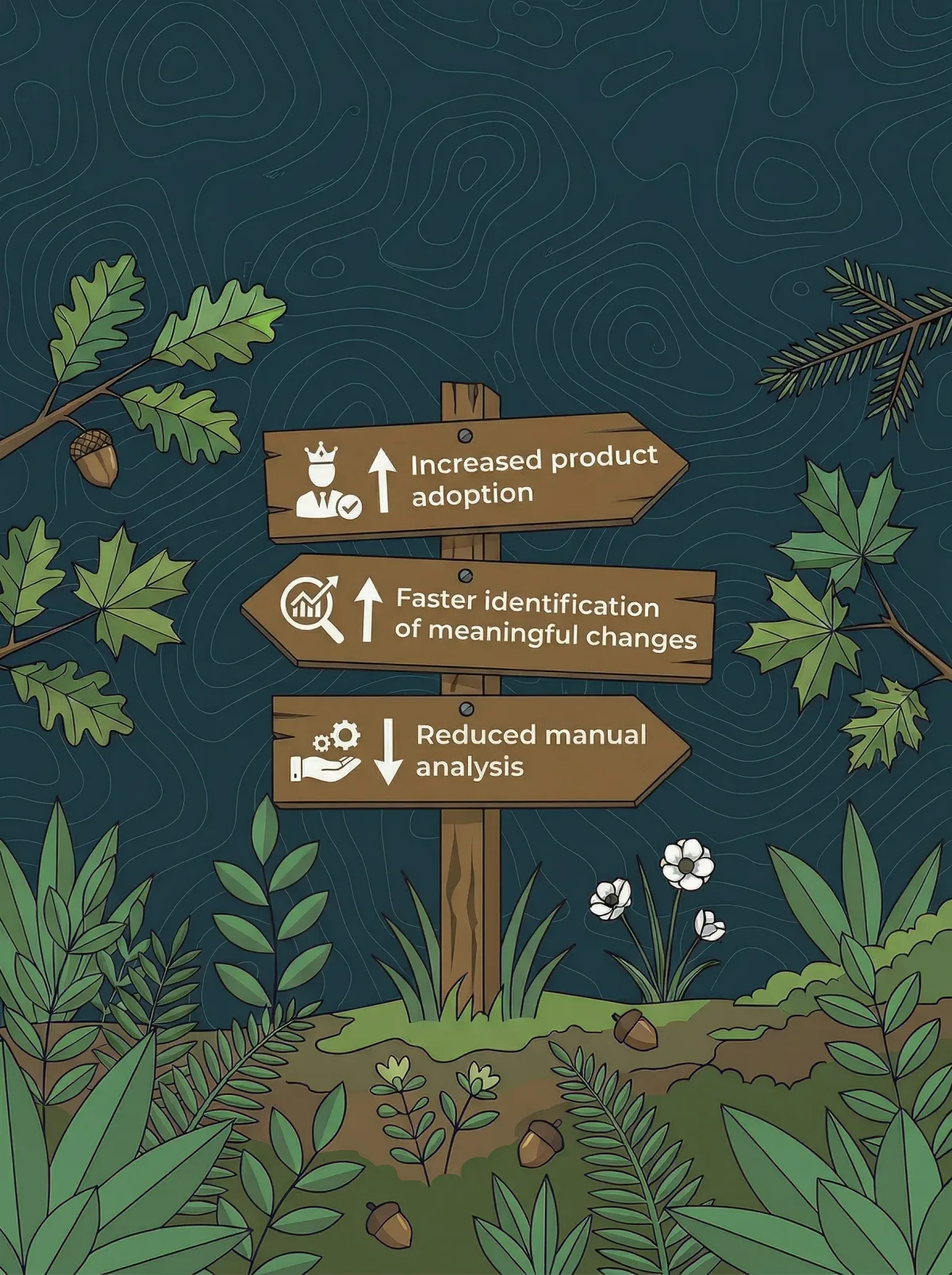
Outcomes included:
Executives gained immediate visibility into operational health across their organization, with clear drill-down paths into supporting data. The result was not just improved efficiency, but a stronger strategic position for Xenia within the leadership workflow.
Executive expectations are evolving faster than most enterprise systems.
Leaders are increasingly exposed to AI tools that surface directional shifts, anomaly patterns, and synthesized insights in seconds. If core platforms cannot deliver comparable signal clarity, strategic attention shifts elsewhere.
This initiative did not replace an existing workflow. It introduced a new executive capability layered onto a mature operational system. The goal was not disruption. It was elevation.
This case demonstrates a pragmatic model:
For enterprise products, competitive relevance now depends on more than feature depth. It requires delivering intelligence at the level where strategic decisions are made.
When executive value is experienced directly, platforms strengthen renewal positioning, deepen buyer confidence, and become embedded not just operationally, but strategically.
That shift is what sustains long-term growth.

How we found the highest-value UX improvements in a mission-critical automation platform — no rebuild required.
Click to learn moreSee how AI can improve clarity and decision-making in complex systems without compromising control or trust.
Click to learn moreSee how AI can accelerate a complex, expert-driven workflow without disrupting the systems users rely on.
Click to learn moreTurning four portals and two apps into one cohesive student experience with a branded north-star vision.
Click to learn moreIf you’re curious about how AI could support your product and your users without overcomplicating things, we’d love to explore it together.
Start a conversation