AI is only as effective as the system it operates within.
After acquisition, Portico planned to introduce AI across its student platforms. Its core experience lacked the structural clarity required to support it.
We rebuilt the workflow first. This created a consistent foundation that allowed AI to be introduced without adding complexity or compromising control.
Following acquisition, Portico operated across three overlapping student platforms. Core workflows were duplicated, interaction models diverged, and terminology varied between products.
One of the most central experiences — logging a skill — required up to 12 screens to complete. Students encountered repeated data entry, inconsistent field structures, and unclear progression.
Leadership was interested in introducing AI to improve efficiency. However, the workflow itself lacked the structural consistency required for intelligent assistance. Fragmentation and ambiguity created more friction than AI could realistically solve.
Before intelligence could scale, the workflow needed to be rebuilt.
We rebuilt and unified the skill-logging workflow across platforms, establishing the structural clarity required for scalable AI.
Users often relied on workarounds or institutional knowledge to complete tasks correctly. Introducing AI into this environment risked amplifying confusion rather than reducing it.
The existing workflow required users to:
As platforms were merged, interaction models diverged and terminology became inconsistent. Students relied on workarounds and institutional knowledge to complete tasks accurately.
Introducing AI into this environment risked amplifying confusion rather than reducing it.The core challenge was not a lack of intelligence, but a lack of structure.
The workflow was not ready for AI. It lacked the structure required to support it.
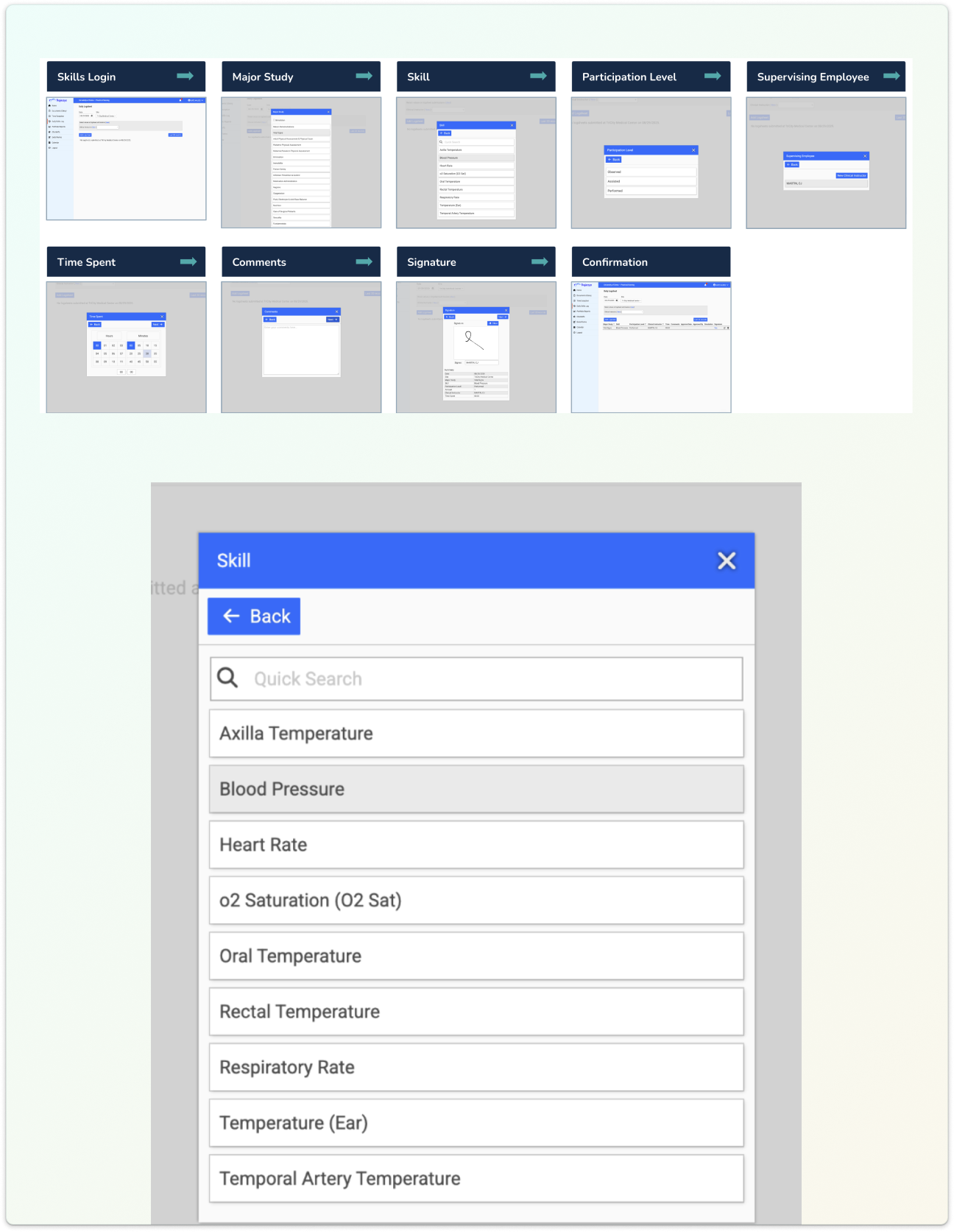
Before introducing AI, we rebuilt the workflow into a coherent, canonical system.
Because this workflow would serve as the backbone for AI-assisted acceleration, it required structural clarity, consistent data modeling, and a reliable manual path users could trust.
This work focused on:
The objective was to create a single canonical workflow that could support both manual entry and AI-assisted acceleration.
We made a set of structural decisions to create a system that AI could operate within:
Establish a canonical workflow across platforms
Create a single, consistent structure for skill logging to eliminate fragmentation and support scalability.
Normalize the underlying data model
Ensure both manual and AI-generated inputs map to the same structured system.
Design a shared path for manual and AI input
Allow voice and manual entry to operate within the same validation framework.
Introduce AI as an accelerator within the workflow
Use AI to speed up input and reduce effort without bypassing structure.
Maintain explicit user validation before submission
Ensure all AI-generated inputs are reviewable, editable, and confirmed by the user.

With a structured workflow in place, AI could now operate effectively within it.
The skill logging experience was redesigned into a guided, sequential workflow aligned with users’ mental models and operational goals.
Redundant steps were removed. Information was consolidated. Progress indicators clarified where users were in the process and what was required next.
The structural cleanup became more than a usability improvement. It became the backbone of both the manual experience and the AI validation sequence.
Because required attributes were normalized and progression was clarified, the same unified workflow could support:
AI operated within the validated system rather than outside of it.
The result was a coherent framework where intelligence accelerated input, while the underlying workflow ensured accuracy, consistency, and user control.
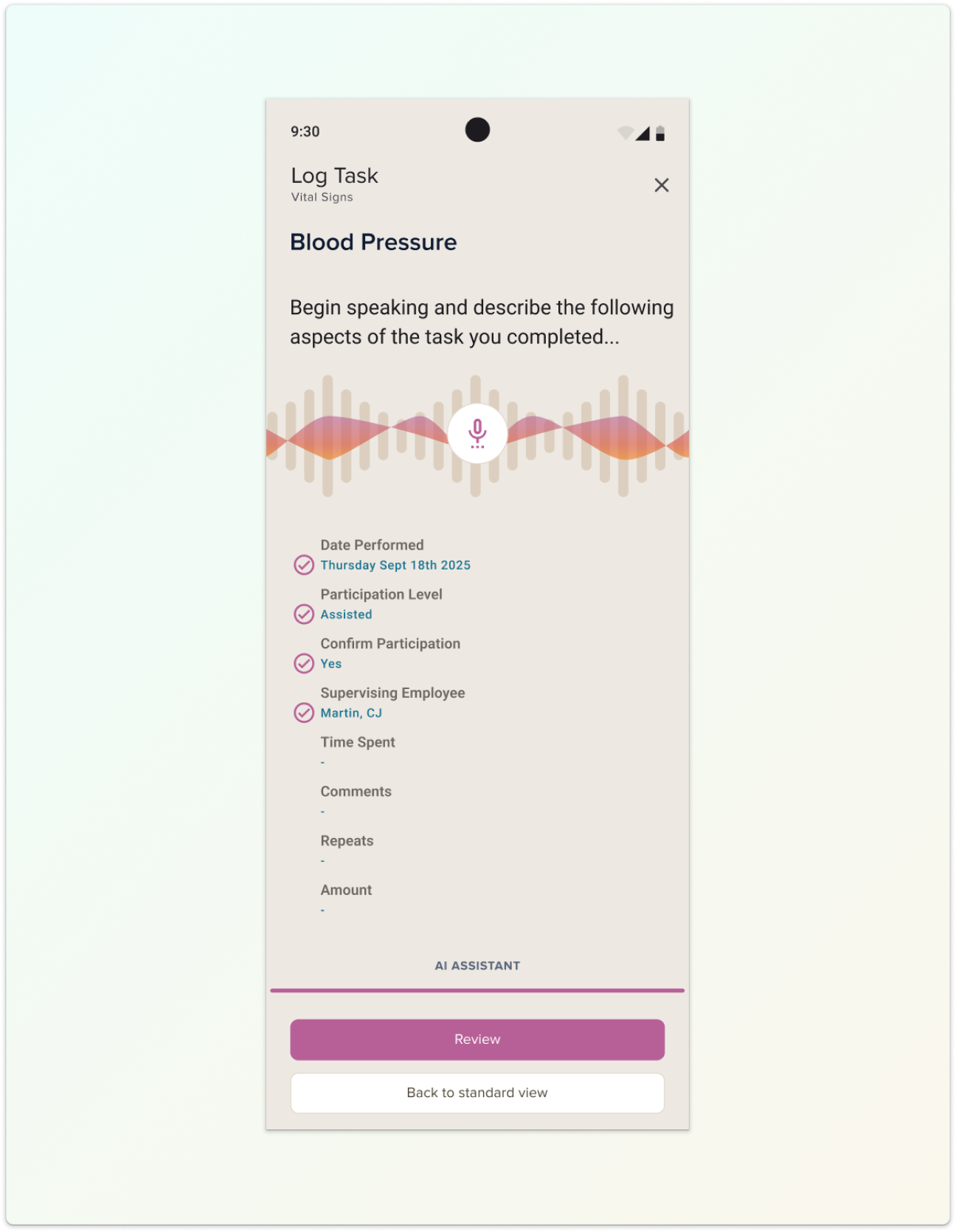
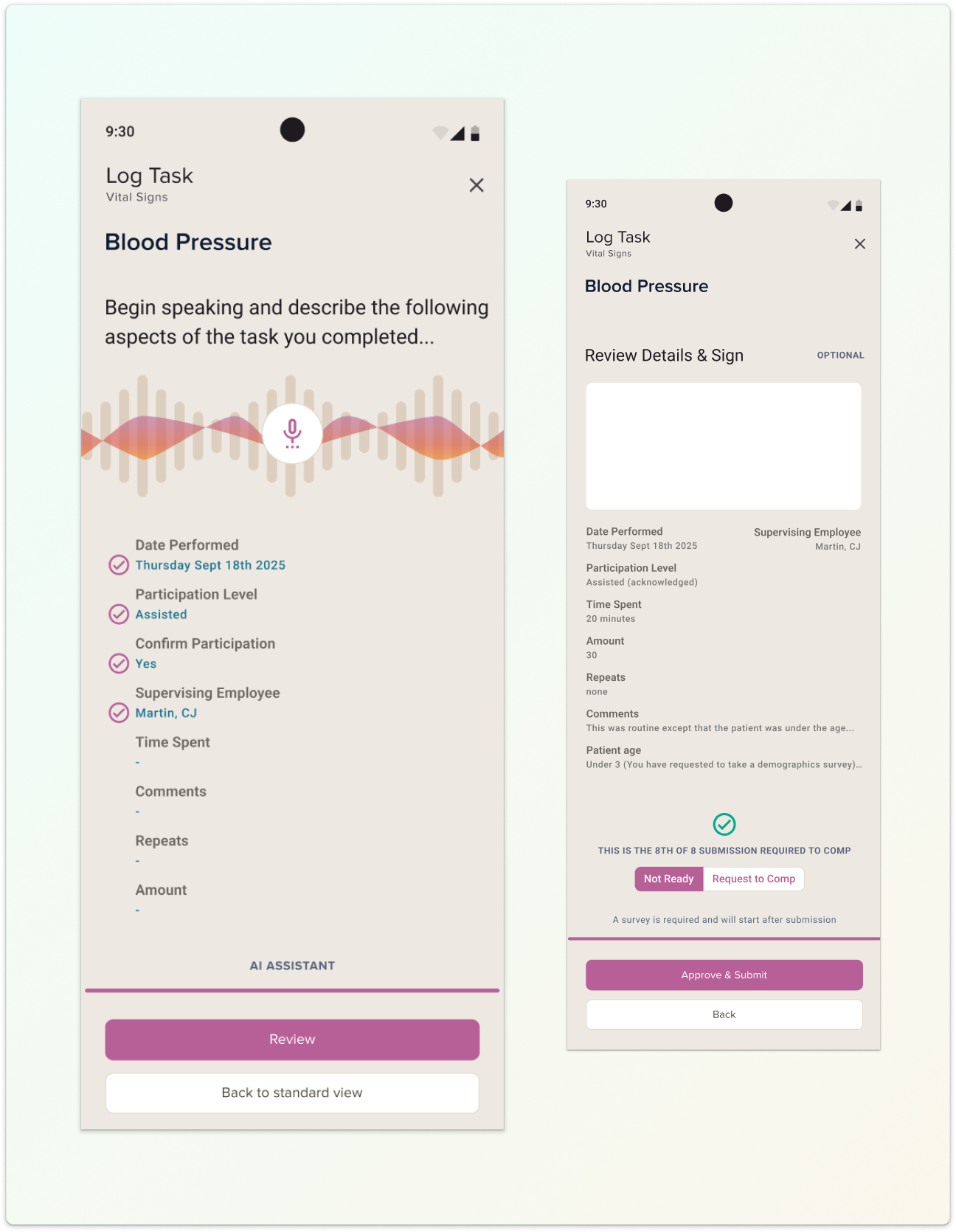
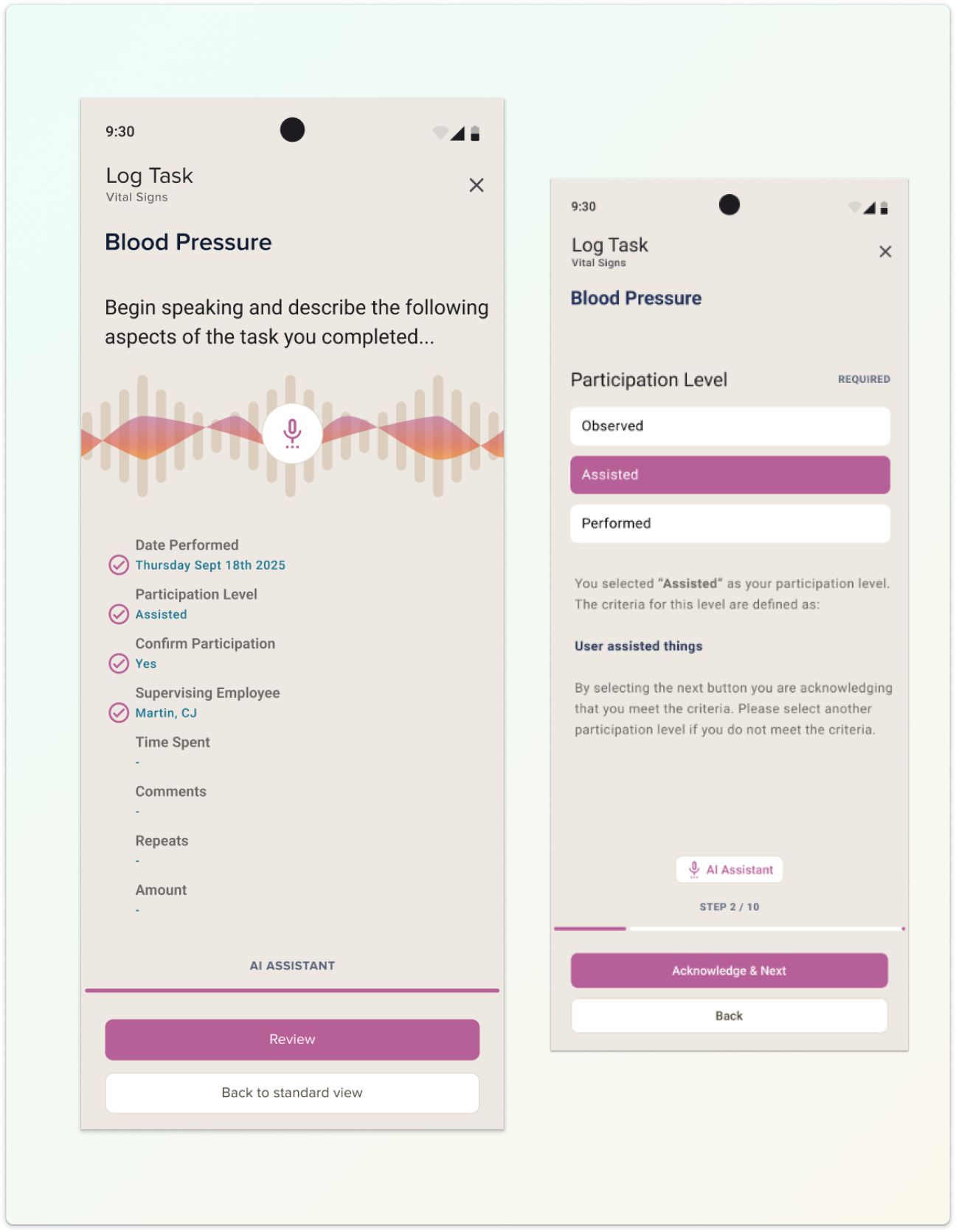
By addressing structural friction before scaling AI, Portico achieved measurable improvements while reducing implementation risk.
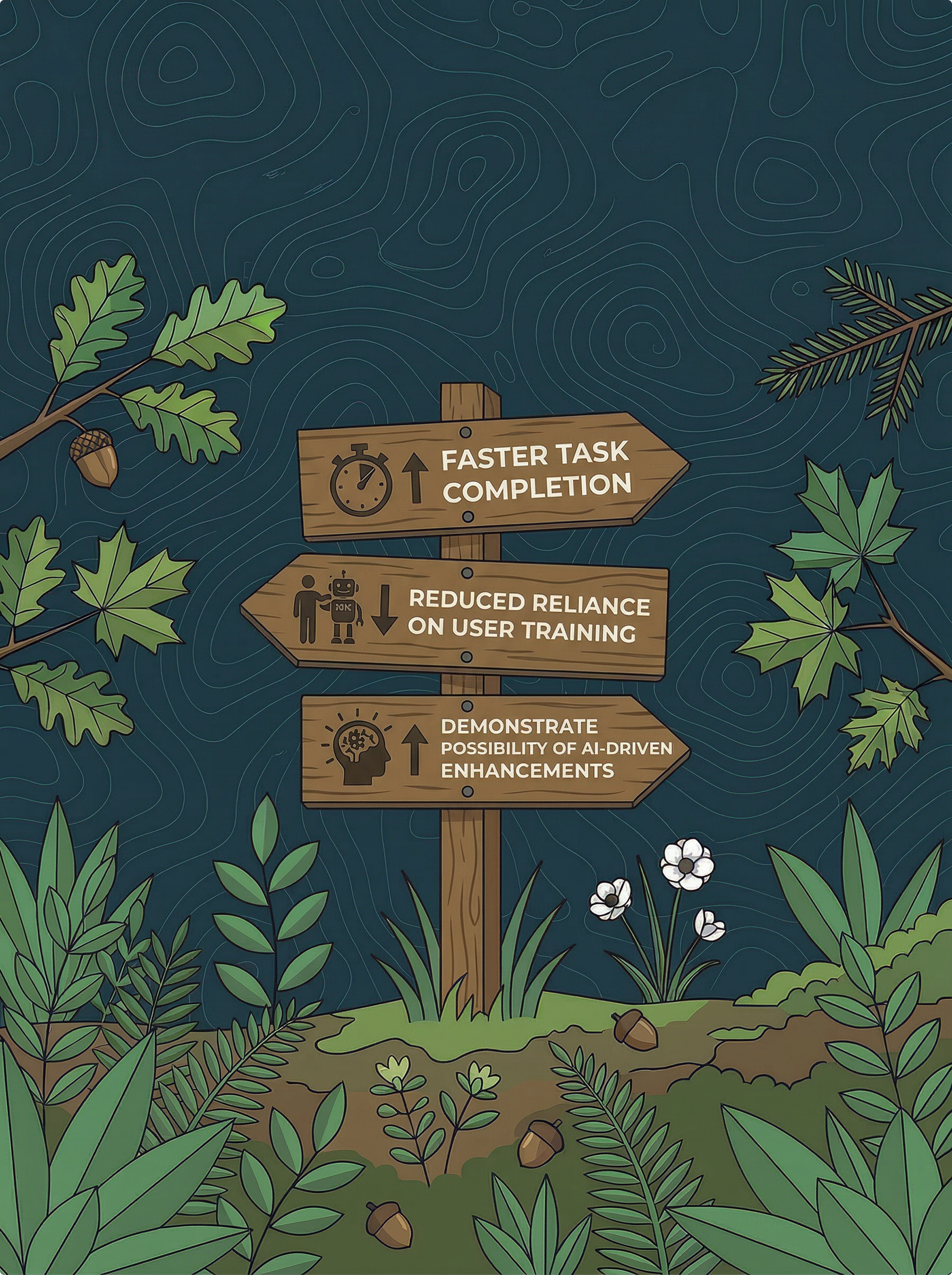
Outcomes included:
Because the workflow served as the validation layer for AI suggestions, subsequent AI expansion was more reliable, governable, and lower risk.
Structural clarity did not just improve usability. It created the conditions for responsible intelligence at scale.
Many companies attempt to introduce AI into workflows that were never designed to support it.
When systems are fragmented across products, teams, or data models, AI does not reduce complexity. It amplifies it.
This shows up in ways that directly impact performance:
Without alignment across systems, AI introduces friction instead of removing it.
Execution slows, outcomes become less predictable, and the value of AI investments is diminished.
With alignment, the opposite is true.
AI becomes a force multiplier, enabling faster decisions, more consistent outcomes, and greater return on existing systems.
AI does not fix broken systems. It exposes them.
Organizations that act early create a foundation for scalable intelligence. Those that do not risk compounding complexity as they grow.

If you’re curious about how AI could support your product and your users without overcomplicating things, we’d love to explore it together.
Start a conversation