AI should accelerate trusted workflows, not replace them.
JAMS needed to reduce friction in a complex job creation process.
We refined the existing workflow and introduced AI as a structured accelerator,
improving speed and usability while preserving precision, transparency, and control.
JAMS is a mature enterprise automation platform built to manage complex, mission critical workflows. Its job creation experience was powerful and highly configurable, designed for technical users who valued control and precision.
Over time, the workflow accumulated complexity. While experienced administrators could navigate it efficiently, new or infrequent users faced high cognitive load and a steep learning curve.
The opportunity was twofold: improve the clarity of job creation while exploring how AI could responsibly reduce friction without disrupting trusted system behavior.
This Waay partnered closely with product and engineering leadership to define where AI could meaningfully support existing workflows, shape the experience strategy, and design AI-assisted interfaces grounded in real operational constraints.
Creating a job in JAMS required navigating multiple configuration steps, selecting from extensive option sets, and understanding dependencies that were not always visible.
Key challenges included:
A full replacement with a conversational AI interface risked disrupting trusted workflows and reducing transparency in a system built for precision.
The issue was not capability. It was friction within a trusted workflow.
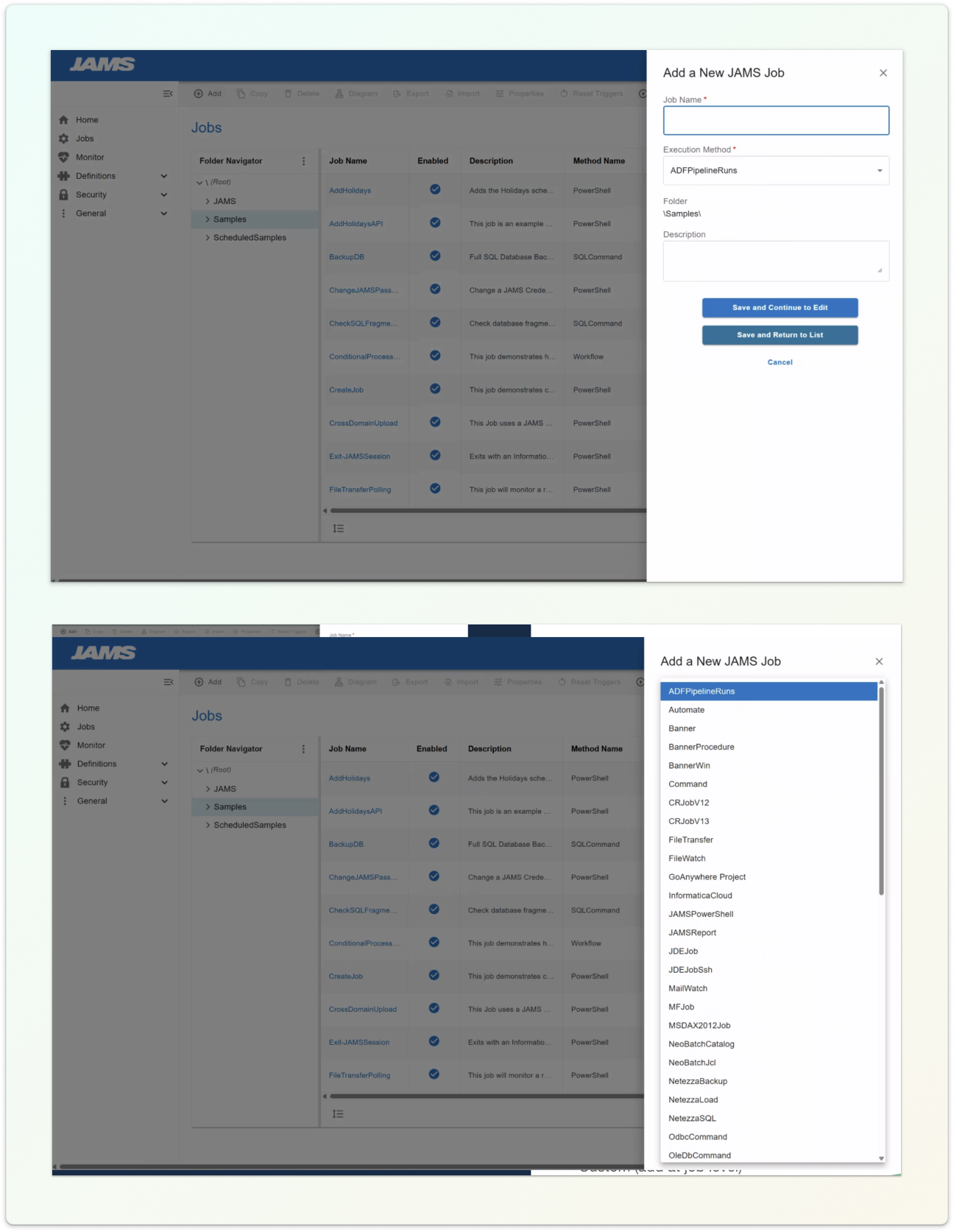
Rather than replacing the workflow, we focused on clarifying and strengthening it before introducing AI.
We streamlined high friction steps, clarified required inputs, improved sequencing, and reduced unnecessary cognitive load. This preserved the canonical configuration model while making it more legible.
Only after structural improvements were defined did we determine where AI could assist.
The approach emphasized:
AI was positioned as a co pilot within a clarified system, not as a replacement for it.
We made a set of design decisions to introduce AI as an accelerator within the existing workflow:
Preserve the existing workflow structure
Maintain the configuration model users already understood and trusted.
Identify high-friction points within the flow
Target areas where AI could reduce effort without changing system behavior.
Introduce AI as guided input, not replacement
Allow users to generate structured configurations without bypassing the system.
Ensure all outputs map to structured fields
Maintain consistency with the underlying system and support validation.
Require explicit user review and confirmation
Preserve control, accuracy, and trust in a mission-critical environment.

With a clarified workflow in place, AI could now accelerate it without disrupting it.
An AI assisted job creation flow was introduced alongside the refined configuration experience.
Users could describe their intended automation in natural language. The system translated this into structured configuration fields, pre filling relevant parameters while preserving visibility into each setting.
The improved workflow provided the validation layer for AI suggestions. Every generated value mapped directly to structured fields and required user confirmation.
This enabled:
The AI layer operated within the validated configuration framework rather than outside of it.
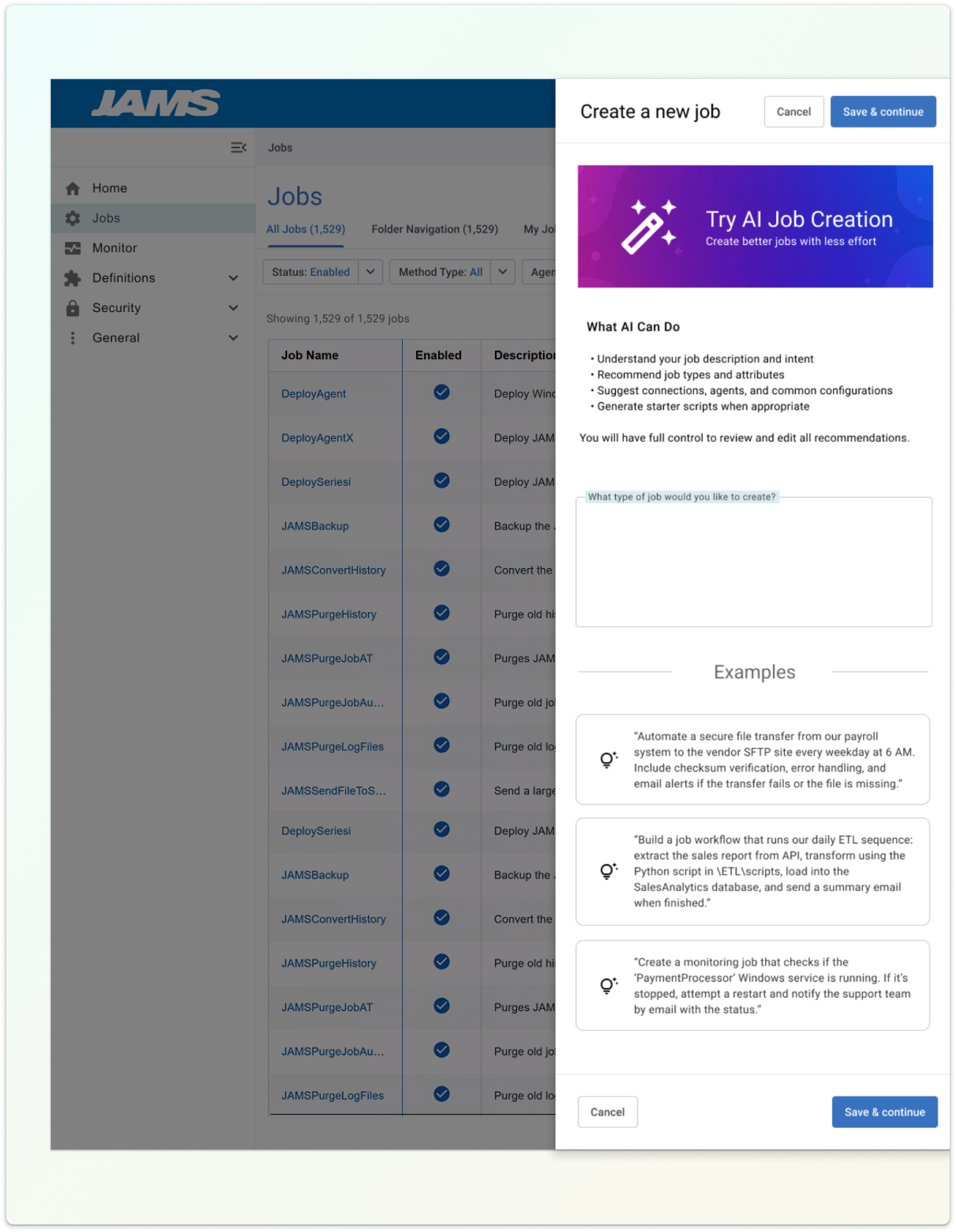
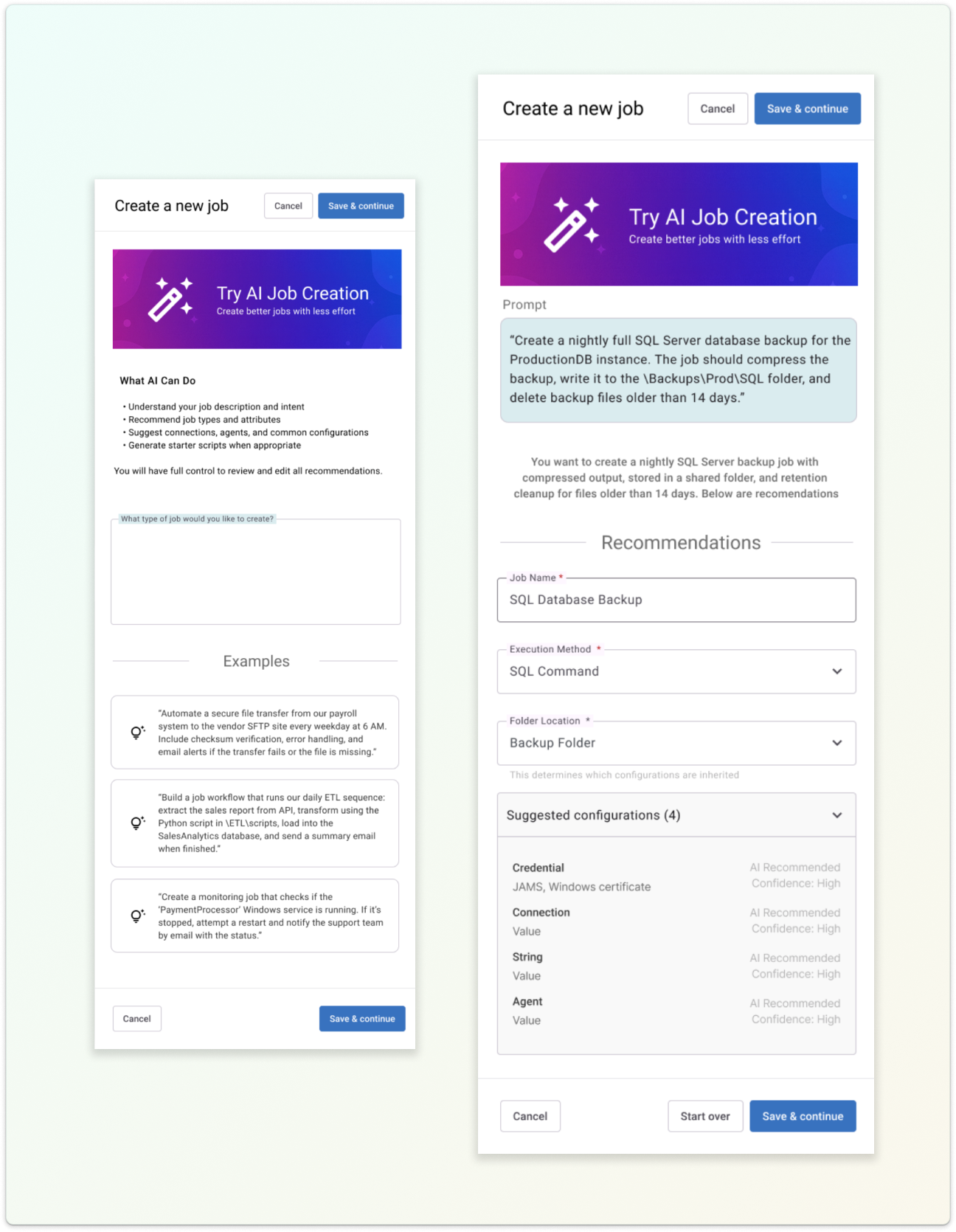
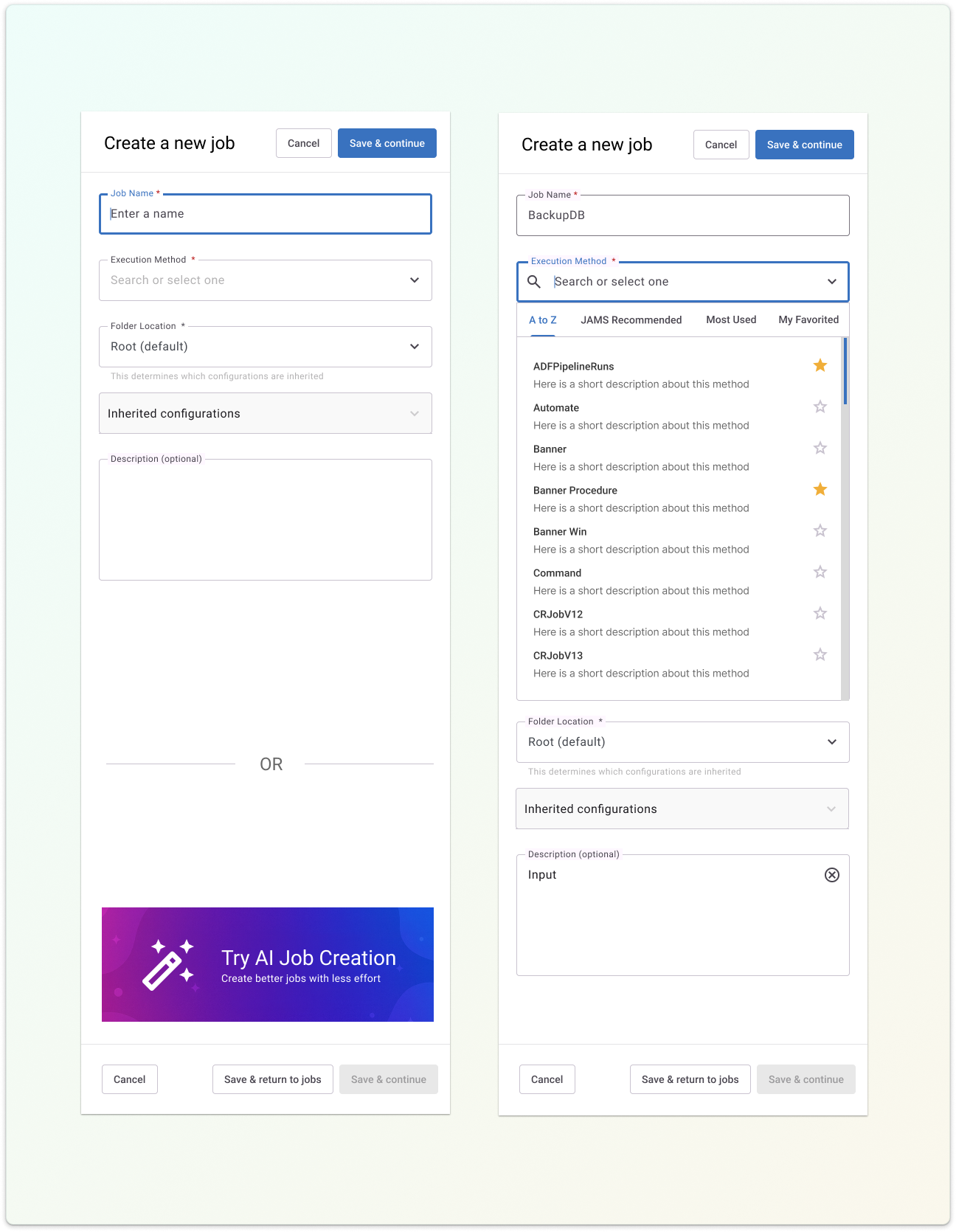
By refining the workflow and introducing AI within defined boundaries, JAMS improved efficiency without compromising operational trust.
Outcomes included:
Because intelligence operated within a validated configuration model, expansion could occur without eroding transparency or governance.
Structural clarity made intelligent augmentation sustainable.
Because AI operated within structured system boundaries, expansion could occur without eroding transparency or control.

Many enterprise systems are not broken. They are trusted, but inefficient.
Replacing these workflows with AI-driven experiences introduces risk, reduces transparency, and erodes user confidence.
This creates real tradeoffs for organizations:
When trust is compromised, adoption slows and the value of AI investments is limited.
By introducing AI within the workflow rather than around it, teams can improve speed and usability without sacrificing control or confidence.
Organizations that take this approach unlock efficiency while preserving trust.
Those that do not risk forcing a tradeoff between innovation and reliability.

If you’re curious about how AI could support your product and your users without overcomplicating things, we’d love to explore it together.
Start a conversation