
We help teams apply AI in key workflows, shape the systems behind it, and move faster with confidence.
Most AI efforts stall before they deliver real value. We focus on making AI actually work in real product environments.
AI is most effective when it improves how work gets done, strengthens the system behind it,
and enables teams to move faster with confidence.
We design for human-in-the-loop systems, ensuring AI supports decision-making with transparency, validation, and control while creating the foundation for more advanced, agentic capabilities over time.

Apply intelligence where it improves execution, reduces effort, and
supports better decisions.
Structure • Clarity • Acceleration • Trust
• Prepare workflows for reliable AI
• Make complex systems easily understood
• Reduce user effort and increase speed
• Build confidence, transparency & control

Design the foundations, guardrails, and interaction models needed to integrate AI responsibly and support more agentic systems over time.
• Structure intelligence across the product
• Define where AI appears in workflows
• Set system behavior and governance
• Design for oversight and validation
• Build for orchestration and scale

Equip teams with systems and patterns to deliver efficiently without losing quality.
• AI-ready design systems and components
• Reusable UX patterns for AI features
• Faster design-to-development workflows
• Shared guidance across teams
• Better use of AI tools in delivery
AI reveals the strength of the system around it. When workflows are fragmented, data is hard to trust, or teams are building without shared patterns, new AI efforts often create more noise than value.
We commonly see gaps such as:
We help teams close these gaps so AI can support the product more effectively, not compete with it.
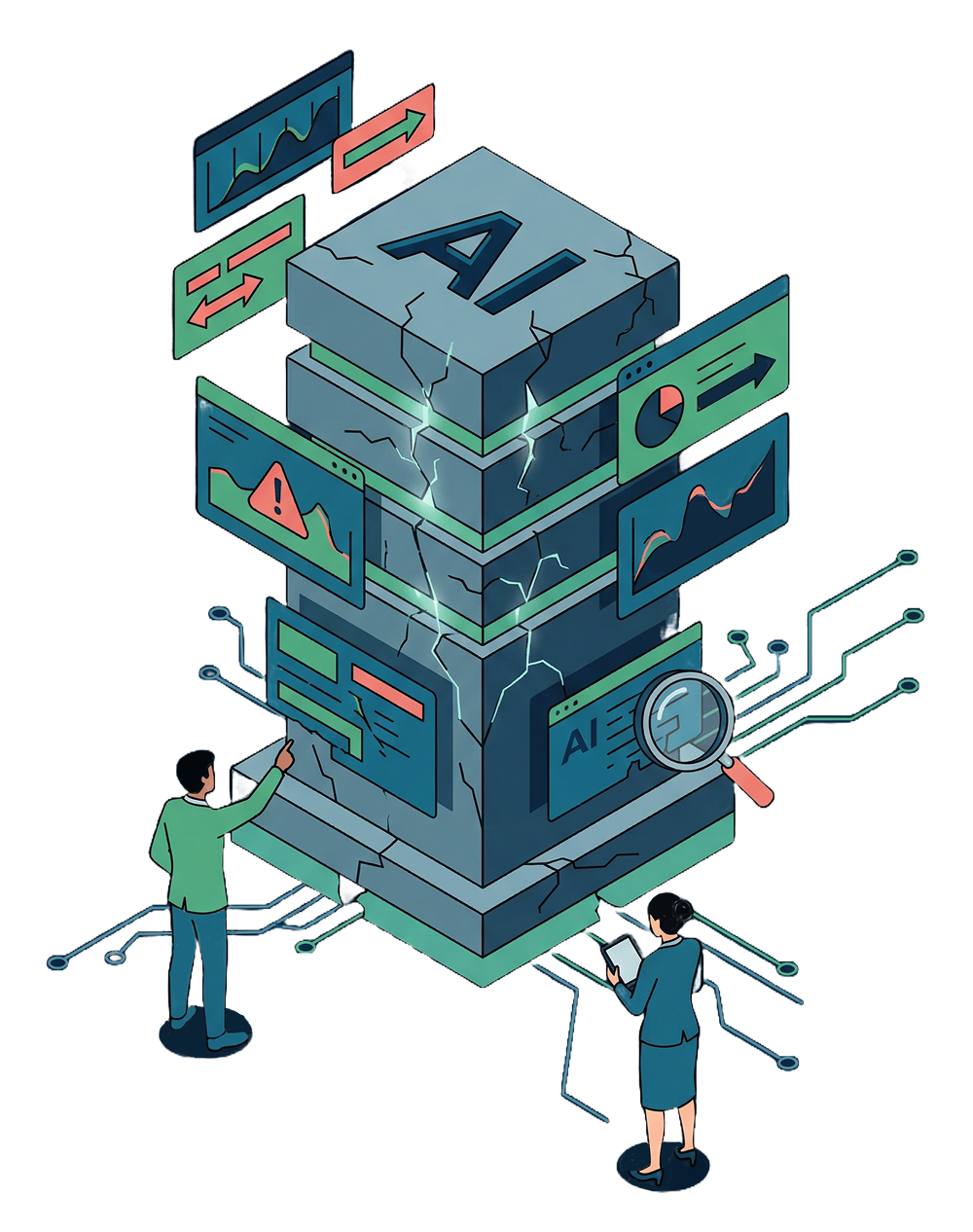
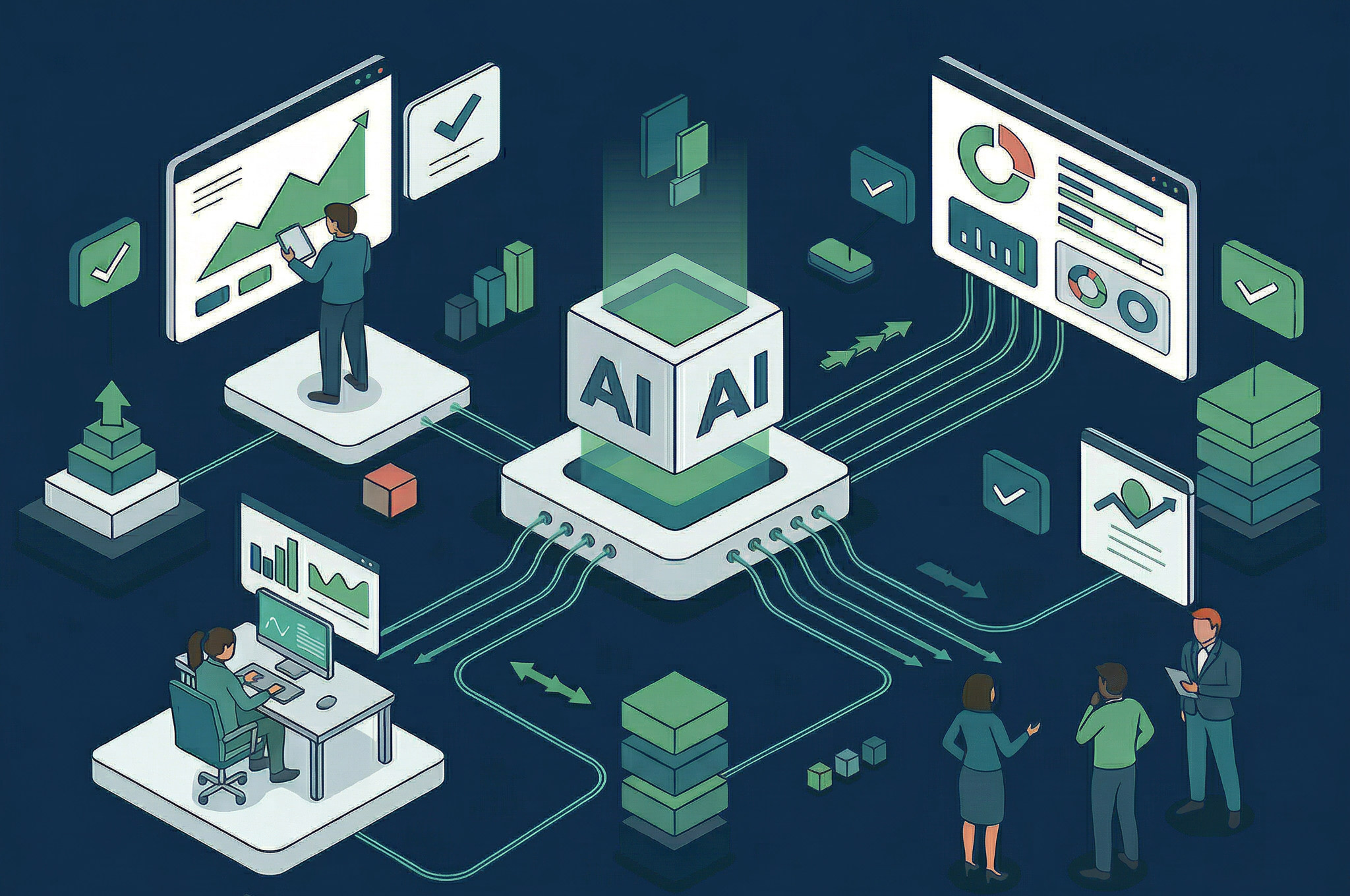
AI works best when it is layered into clear workflows, sound product foundations, and systems users can trust. Rather than treating AI as a stand-alone feature category, or a life preserver, we look at how intelligence can improve the broader experience of work.
Our support meets the product where it is. Some clients come to us with a specific workflow they want to improve. Others need help shaping a broader AI direction or enabling the team behind it. In many cases, the work expands over time.
AI integration is not just a feature rollout. It is a systems challenge. We apply service design and enterprise UX thinking to help teams create immediate value while building toward more coordinated intelligence over time.
See how AI can improve clarity and decision-making in complex systems without compromising control or trust.
Click to learn moreSee how reducing workflow friction creates the clarity and structure required for effective AI adoption.
Click to learn moreSee how AI can accelerate a complex, expert-driven workflow without disrupting the systems users rely on.
Click to learn moreUsing AI to surface meaningful signals while making outputs more understandable, traceable, and trustworthy.
Using AI to surface meaningful signals while making outputs more understandable, traceable, and trustworthy.
Design thinking amplified by intelligent systems.
AI is not a separate discipline within our work. It strengthens how we approach product strategy, UX design, and team enablement.
We apply AI where it improves workflows, reduces friction, supports better decisions, or helps teams deliver more effectively. Depending on the engagement, that may mean identifying where intelligence can add value, designing how it behaves in the product, or building the systems and guidance that help teams scale it well.
These are some of the ways that work shows up in practice.

Clarifying where intelligence creates real value.
Before AI can improve a product, teams need clarity on how work actually flows across tools, roles, and decision environments.
We use service design thinking, workflow modeling, and research synthesis to identify where friction exists, where judgment matters, and where intelligence can strengthen coordination or reduce cognitive load.
Typical activities may include:
• Mapping workflows, handoffs, and decision points
• Identifying high-value AI opportunities and readiness gaps
• Defining trust, governance, and human oversight needs
• Prioritizing initiatives against measurable product outcomes

Designing intelligence into real product experiences.
AI works best when it is introduced through interfaces that are clear, contextual, and grounded in real workflows.
We design interaction patterns that help users understand what the system is doing, what it is recommending, and where human judgment should remain in control.
Typical activities may include:
• Designing AI-assisted creation, guidance, and recommendation flows
• Making outputs understandable, traceable, and easy to validate
• Aligning system autonomy to the moment and the user’s role
• Strengthening clarity inside dense, operational interfaces

Helping teams build and evolve with AI more effectively.
AI integration is also a team and systems challenge. Strong implementation depends on reusable patterns, shared guidance, and workflows that help design and technology teams move faster without losing clarity or consistency.
We help teams translate AI ambition into scalable ways of working.
Typical activities may include:
• Developing reusable AI interaction patterns and design guidance
• Strengthening design systems for AI-enabled products
• Improving design-to-development workflows and handoff
• Helping teams evaluate, refine, and scale AI capabilities over time
If you’re curious about how AI could support your product and your users without overcomplicating things, we’d love to explore it together.
Start a conversation